“42 Up”

Some ten years ago, I watched a documentary film that had a deep impact on how I perceive life. It was entitled “42 Up”. It followed a number of Brits from different regions and social backgrounds every seven years, from the ages of seven to forty-two. I saw them go from being sparkly-eyed kids to awkward teenagers to responsible adults to middle-aged men and women. Some more ordinary than others, some happier, some more successful, some more fulfilled than others.

Seeing the result of this film, spanning over thirty-five years, left me feeling both amazed and sad. What I found in all of them was the inevitable loss of innocence that comes with age and experience. That also went with a loss of ideals in many. And loss of beauty as well. Today, at forty-two, I should watch it again and see how I feel about it. Or better still, I should watch the latest film in Michael Apted’s series that began with “Seven Up!” (1964), which is now “63 Up”. Somewhere along the line, the title lost its exclamation mark… which, incidentally, seems a perfect way to sum up the difference between the ages of seven and sixty-three.

In this COVID-19 crisis, I am fortunate to have a new job that I’m excited about, to have my wide-eyed child by my side, to live in a home and a neighbourhood I love, to be in regular touch with my loving family. But these times of relative isolation have also brought on a new wave of reflection which, combined with the Netflix content I’ve been watching (such as “Marriage Story” or “The Last Dance”) reminds me that life doesn’t turn out the way one expects. Ever. There are unexpected successes, joys, falls and pains. And while love and hope inspire and drive us, suffering and pain play a significant role in shaping us as well. I saw this in “42 Up”, too. There is so much we do – or avoid doing – for fear of being hurt.

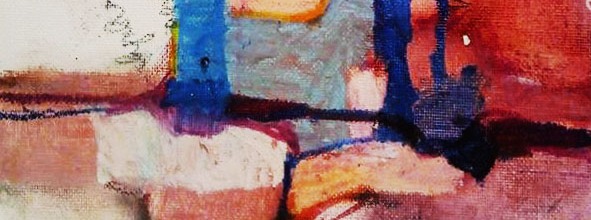
(Taken from art by Tijana Djapovic)

Though I don’t believe that we are born as clean slates, I do see us as clay shapes that life hits, carves, moulds over time. Bit by bit, we evolve into complex beings, growing increasingly unique and different from each other, as life adds one texture after another to our initially smooth clay. At middle age, I perceive love and hope in my peers. But none has kept that initial innocence we all used to have. That faith that there will be a “happily ever after”. Because our lives have taught us otherwise. There is no “ever after” as such. There is only happy, then unhappy, then happy again, and so on and so forth. But over time, erosion makes us less affected or moved by unhappiness and happiness alike. Our skin gets thicker, we roll with the punches and we enjoy well-deserved rests after each round.

In this time of contemplation for the whole world, I do appreciate what I have. I also look forward to many more moments of happiness. Even though I know better than to expect what I imagine for myself to come true (in the positive or the negative sense), I do know that joy comes back to me after every struggle. But where am I right now? If I were to do my own “42 Up” recap of my life, it would probably go like this: At age seven, my world was enchanted, almost perfect. At fourteen, it was painful and filled with self-loathing. At twenty-one, it was hopeful and looking to the future. At twenty-eight, it was harsh but glorious. At thirty-five, it was awakened to what adult life is. At forty-two, it is unsettled and I am searching for steady ground.
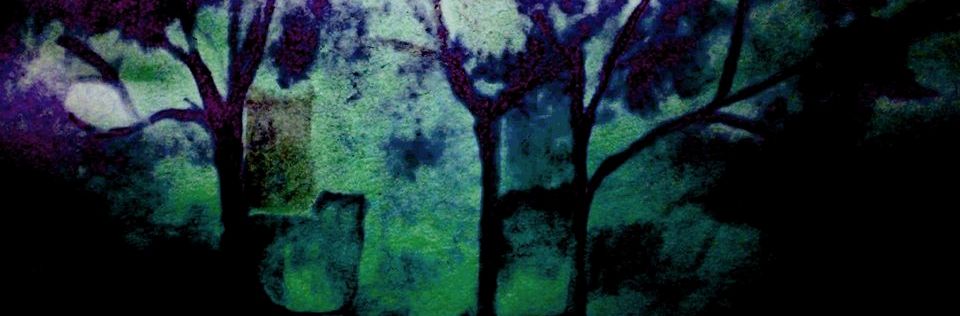
(Taken from art by Tijana Djapovic)

For three years, I have been feeling like the earth under my feet has been shaking. And, like in a seismic zone, every time it stops, another earthquake rocks the ground I walk upon. And it isn’t easy to build on moving ground. But I have been fortunate enough to join a company built on the concept of constant transformation, flexibility and adaptability. And my travelling companion is a little girl who loves the circus so much, she now excels at finding her balance in any situation like a tightrope walker. What I must now learn from both is not to expect the ground to ever stand still, but rather to function and grow on moving ground. Perhaps by the next seven-year mark, my spirit will be as agile as my daughter’s nimble body.

(Title: Documentary Film directed by Michael Apted)

“We must die to one life before we can enter into another”

The whole quote by Anatole France is: “All changes, even the most longed for, have their melancholy, for what we leave behind us is a part of ourselves; we must die to one life before we can enter into another”. It is a perfect description of how I feel right now. With every change in our lives, we have to relearn to live and be ourselves.

Leaving home to go to university, moving to another country, moving in with someone, getting separated, having a child, starting a business… These are all changes that force us to question our habits and rethink how we structure our lives, our space, ourselves.

It sounds easy enough to do, especially for someone who is as used to change as I am. I have not only been used to it, but have sought it and caused it since I was fifteen years old. And yet, I find that over the last few years, my ability to adapt to change is not what it used to be. When I was younger, change was often scary, but also exciting.

Art by Tijana Djapovic (c)

Changing schools at age fifteen, going off to university and sharing an apartment with complete strangers in a foreign land at seventeen, those first big deliberate changes in my life may have been a bit hard because I was still figuring out who I was. At the time, I found that all our routines and customs are a part of how we perceive ourselves in relation to others, whether in comparison or in opposition. At first, we think these habits are our own, as they helped shape who we are. So giving some of them up to better coexist with others is not easy, especially when you are young, stubborn and rebellious as I was. But as time goes by, you realise that some of these habits are not an integral part of who you are. You are just mimicking what you observed while growing up. You learned them from your family, your social circle, your fellow countrymen, and never bothered to question them. With age, as you begin to piece together the puzzle of your very own identity, you find that there is more room for change in your habits than you thought.

The years pass and you start being comfortable with your strong adaptable – yet authentic – self. And then, unexpectedly, this trend is reversed. At least for me. The habits, schedules, structure I’ve come to live by, through experimentation and change, have been my own. But gradually, I find that when one of the foundations of the life I’ve built for myself shifts, or worse, disappears, all that beautiful adaptability I pride myself on has begun to crumble. Reinventing myself was easy enough when I was young. Past the age of thirty, it started getting trickier. And now, past the big 4-0, every substantial change feels like an earthquake. Why is that? Do we stiffen with age, like our bodies do? Do we become rigid, judgmental, uncompromising? I doubt it, even though I sometimes catch myself being far less tolerant than I was fifteen years ago. Rather, I’m coming to realise that the tipping point comes when you feel that your life should be built by now. It has to do with expectations: your own and society’s. As long as you perceive yourself as having to build your career, your family, your life, it is fine to test, change, take risks. Because you know you are moving towards a goal, namely the fulfilment of your life’s purpose. But once you have your family and you’ve found a home you love, once you’ve built a career for yourself, every structural change in your life starts to feel like destroying what you’ve built rather than building something new.

Art by Tijana Djapovic (c)

When you’ve been on the roller-coaster of life’s trials and errors enough times, the expected smooth and straight train ride of mid-life is very appealing. Some manage to stay on that track for a very long time. I haven’t. Perhaps it’s my restless, strong-willed, intense nature that makes it impossible to compromise what I believe to be essential. Whatever the reason may be, the structure I’ve built for myself is once again shaken. And I find this very unsettling. It’s scary, but not the exciting kind of scary I used to know. It’s an unpleasant sort of scary this time around. My life experience has taught me that I will undoubtedly adapt to these changes once again, but this time around I am questioning the vast campaigns aiming to convince us that we should ‘seek change’ and ‘be our authentic selves’. Regardless of the price you have to pay for that. Perhaps there is, after all, some merit in wanting to enjoy security – with all its compromises – rather than this glorified ‘authenticity’ past mid-life. Perhaps.

Be that as it may, considering the life I’ve led and the way my experiences have shaped me, that is not my path. I have always caused or welcomed change when something wasn’t working in my life. As that is still the case, after the recent changes I’ve brought on in my life, I will have to rethink myself again… after I’m done mourning my former self.

(Title: quote by Anatole France taken from “The Crime of Sylvestre Bonnard”)