“42 Up”

Some ten years ago, I watched a documentary film that had a deep impact on how I perceive life. It was entitled “42 Up”. It followed a number of Brits from different regions and social backgrounds every seven years, from the ages of seven to forty-two. I saw them go from being sparkly-eyed kids to awkward teenagers to responsible adults to middle-aged men and women. Some more ordinary than others, some happier, some more successful, some more fulfilled than others.

Seeing the result of this film, spanning over thirty-five years, left me feeling both amazed and sad. What I found in all of them was the inevitable loss of innocence that comes with age and experience. That also went with a loss of ideals in many. And loss of beauty as well. Today, at forty-two, I should watch it again and see how I feel about it. Or better still, I should watch the latest film in Michael Apted’s series that began with “Seven Up!” (1964), which is now “63 Up”. Somewhere along the line, the title lost its exclamation mark… which, incidentally, seems a perfect way to sum up the difference between the ages of seven and sixty-three.

In this COVID-19 crisis, I am fortunate to have a new job that I’m excited about, to have my wide-eyed child by my side, to live in a home and a neighbourhood I love, to be in regular touch with my loving family. But these times of relative isolation have also brought on a new wave of reflection which, combined with the Netflix content I’ve been watching (such as “Marriage Story” or “The Last Dance”) reminds me that life doesn’t turn out the way one expects. Ever. There are unexpected successes, joys, falls and pains. And while love and hope inspire and drive us, suffering and pain play a significant role in shaping us as well. I saw this in “42 Up”, too. There is so much we do – or avoid doing – for fear of being hurt.

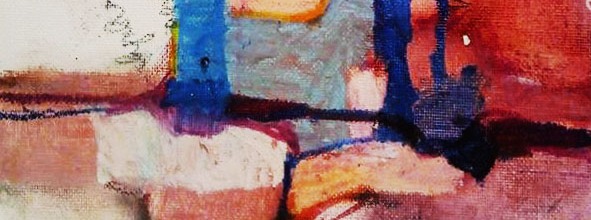
(Taken from art by Tijana Djapovic)

Though I don’t believe that we are born as clean slates, I do see us as clay shapes that life hits, carves, moulds over time. Bit by bit, we evolve into complex beings, growing increasingly unique and different from each other, as life adds one texture after another to our initially smooth clay. At middle age, I perceive love and hope in my peers. But none has kept that initial innocence we all used to have. That faith that there will be a “happily ever after”. Because our lives have taught us otherwise. There is no “ever after” as such. There is only happy, then unhappy, then happy again, and so on and so forth. But over time, erosion makes us less affected or moved by unhappiness and happiness alike. Our skin gets thicker, we roll with the punches and we enjoy well-deserved rests after each round.

In this time of contemplation for the whole world, I do appreciate what I have. I also look forward to many more moments of happiness. Even though I know better than to expect what I imagine for myself to come true (in the positive or the negative sense), I do know that joy comes back to me after every struggle. But where am I right now? If I were to do my own “42 Up” recap of my life, it would probably go like this: At age seven, my world was enchanted, almost perfect. At fourteen, it was painful and filled with self-loathing. At twenty-one, it was hopeful and looking to the future. At twenty-eight, it was harsh but glorious. At thirty-five, it was awakened to what adult life is. At forty-two, it is unsettled and I am searching for steady ground.
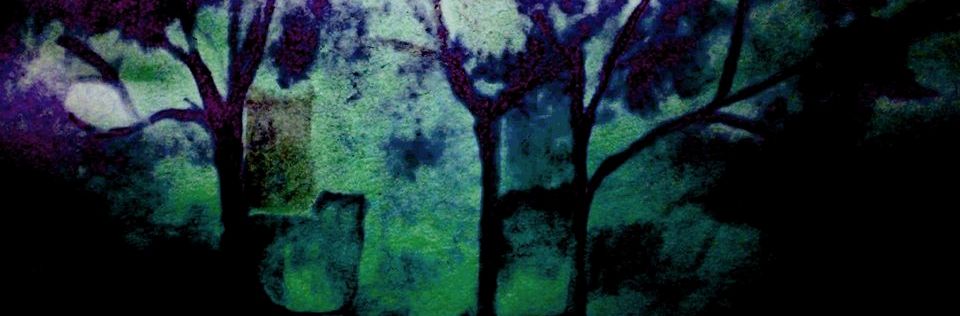
(Taken from art by Tijana Djapovic)

For three years, I have been feeling like the earth under my feet has been shaking. And, like in a seismic zone, every time it stops, another earthquake rocks the ground I walk upon. And it isn’t easy to build on moving ground. But I have been fortunate enough to join a company built on the concept of constant transformation, flexibility and adaptability. And my travelling companion is a little girl who loves the circus so much, she now excels at finding her balance in any situation like a tightrope walker. What I must now learn from both is not to expect the ground to ever stand still, but rather to function and grow on moving ground. Perhaps by the next seven-year mark, my spirit will be as agile as my daughter’s nimble body.

(Title: Documentary Film directed by Michael Apted)

“Dear, don’t hope any more”

These are the words spoken by dying Beth March to her sister Jo, in Louisa May Alcott’s classic “Little Women”.

Three nights ago a childhood friend of mine passed away. His name was Sasha (Saša).

I remember him as the bright-eyed beautiful boy with a mischievous smile I once knew. Since hearing the news, images of him pop up in my head. I see his face, which his cousin justly described as that of a cherub: rosy-cheeked, curly-haired, sun-kissed and sweet. I hear his voice, his accent and intonation. I especially hear his laugh. Throughout our childhood and early adolescence, he was my brother’s closest “summer friend” (those friends we see every summer, who mean so much to us). He was also the cousin of my closest “summer friend”. And though Sasha and I were not that close, he meant a lot to me. He was my first childhood crush. It was a crush that lasted into my early teens and was reignited every summer for years. I never told him that. I remember the feeling of anticipation before that first annual encounter with him, summer after summer… and my invariably blushing when it happened.

Taken from Art by Tijana Djapovic (c)

For years, our families got together on the Dalmatian island where our grandparents lived. We spent every day together. For the most part, we naturally split into groups: parents with parents, boys with boys and girls with girls. But we were also part of a whole, which reunited one month of every year. A whole that I can now only describe as “a very merry bunch”. To me, Sasha is a symbol of our enchanted childhood summers, of jumping into the translucent Adriatic waters, splashing the tanning tourists, of eating sweet and salty peaches washed in sea water, of excursions to neighbouring islands on our small boat, powered by our Tomos 4 motor, of knees scorched on the island rocks that we used to run on barefoot along the sea, of us kids escaping the house at post-lunch siesta time to play cards in the shade… I also remember one evening when all the families on our street gathered at a nearby hotel for a huge raffle, in which our two families won almost all the prizes. His family won bottles of red wine, ours won a huge leg of prosciutto. For days after that, we all gathered in the evenings to share all that ham and wine on the waterfront.

The enchanted years lasted until the war broke out in Yugoslavia. Sasha’s parents were a mixed couple, so they moved to Canada, where they knew they would be safe. Those were the years of disillusion in so many ways and the island was never the same to me after that. Nor were any of us. We were growing up, and adolescence was a rude awakening for me. Over a decade later, I moved to Montreal. That very first summer in my new country of residence, I visited Sasha in Toronto. I met his girlfriend, who has since become his wife and the mother of his child. I was so happy to see that, in the man before me, there was still that lively, witty, charming boy I’d known and fancied. He had been kicked around by life, as had I. But he had not let the light inside him die. And now it has gone out.

Taken from Art by Tijana Djapovic (c)

Last night, my daughter crawled into my bed after having had a nightmare. In her sleep, she held on to me and said: “I want you to stay with me”. It brought tears to my eyes. Sasha’s little girl wanted her daddy to stay with her too, but he couldn’t. When I received the message announcing his death, I was in the middle of a conversation with a girlfriend who, like me, lives alone with her kids. Just then, we were saying that we couldn’t risk getting seriously sick because our children depended on us. Sasha probably thought the same. All his hope and positive energy, all the love and support of his family and friends were not powerful enough to keep him alive. Life seems to have neither rhyme nor reason, and death takes people away at random. I do not believe that good things happen to good people, and bad things to bad people. Sometimes I even get the impression that the opposite is true. Montherlant’s quote “Wickedness, like alcohol, preserves” often rings true.

Taken from Art by Tijana Djapovic (c)

Thinking of Sasha, I think of all the things he had wanted to experience, and now never will. And I wonder what it is that I want to achieve or experience while I am alive. What do I think I absolutely need to do before I die? The only thing that seems to be essential is being there for my daughter, while she needs me. For the rest, I have ambitions and dreams enough, but when I think of my friend’s death, I feel like none of those really matter. Of course, I wish to write and direct films, to achieve professional success doing something I love, I would like my children’s book to be published and I want to write more, I wish to fall in love again and be loved, I want to dance and sing and see friends and travel. But if I were to leave tomorrow, the great world would go on spinning, other stories would be told, other books would be written, other films directed and other women loved by the men I could potentially fall in love with. Still, no one is replaceable, so when a loved one dies, their family and friends miss them forever. But they, too, go on living. The one person who would be rendered dysfunctional for life by my absence is my daughter. Until she is able to be independent, I am responsible for her health, her well-being, her safety. That is my higher purpose here. The rest is what makes life good, exciting, beautiful, worth living, while I’m here. But it will not matter in the afterlife – if there is such a thing.

And so, once again, my thoughts turn to Sasha and, this time, to his wife. She will have to be strong enough for two now, courageous enough for two, loving enough for two, constant enough for two. I wish her well, and may she never have to suffer such a loss again as long as she lives.

Dear sweet Sasha, may you rest in peace. Počivaj u miru. I shan’t forget you.

In memoriam Saša, 1975-2020

(Title: Quote by Beth March in “Little Women” by Louisa May Alcott)