“Dripping Water hollows out Stone”

The quote “Dripping water hollows out stone, not through force but through persistence” is often used to inspire consistent action for change. However, it can be seen from another angle, namely the slow and consistent process of victimisation.

We have probably all, at one point or another in our lives, been victimised, and we may also have victimised someone ourselves. For my part, I was bullied by classmates at school, then later by my boyfriend and then again by my boss. And yet, I am by no means subdued, submissive or any of the common stereotypes about bullied individuals. On the contrary, I have always had a strong personality, I am outspoken and extroverted, communicative and enthusiastic. But none of us are ever just one thing. And so, while I flourish in a welcoming environment, I shrivel in the face of aggression.

Art by Tijana Djapovic (c)

Like most victims of bullying, I only blamed myself at first. I then went on to solely blame my bully, pulling myself out of the equation. Finally, I realised that both parties play a role in this power game. The fault, I believe, still lies solely with the bully, even if they are often themselves former victims of bullying. Nonetheless, bullying rests on dynamics between two or more people, who all play a part in it. Blaming the tormentor will not help the sufferer in the long run, but I think that understanding the dynamics which turn self-confident adults into self-doubting children can be helpful. The question is: how does one person take away the power from another without the use of force or threat thereof?

If bullying is a power game, manipulation is its motor, and whether it happens at the level of the individual or the group, it can only be effective when it is slow and gradual. No wife beater ever attacked their partner at their first encounter, nor did Nazi leadership expose its true goals to the masses as they initially ran for election. Like propaganda, any manipulation functions as a poison you slowly and unwittingly ingest every day. Before you realise it, your sense of self has shifted or crumbled. The impact of verbal and psychological abuse is indeed like dripping water on stone: the constant repetition of a message over time impacts our perception and also self-perception. This slow process is illustrated in one of my favourite films, George Cukor’s classic “Gaslight”, in which Joseph Cotton’s character Brian Cameron reveals to Ingrid Bergman’s Paula Alquist at the end:

“You’re slowly and systematically being driven out of your mind.”

– “Gaslight” (Dir. George Cukor, Screenplay by John Van Druten, Walter Reisch, John L. Balderston ; Based on, “Gas Light” 1938 play by Patrick Hamilton)

This scene shows an already self-doubting and weakened Paula (Ingrid Bergman)
blatantly manipulated by her husband, Gregory (Charles Boyer) in Cukor’s 1944 “Gaslight”.

The film is based on a play that inspired the term “gaslighting“, used to refer to a specific type of manipulation where the manipulator is trying to get someone else to question their own reality, memory or perceptions. Thus, day after day, the bullies insidiously isolate their victim, question their worth while feigning, or even believing, they care about the victim’s welfare. More often than not, the bullies feel they are justified in their actions. When they don’t see themselves as victims, they believe they are helping their victims become tougher. Whether male or female, bullies generally mistake toughness for strength, which is still common in the workplace, at school, and in the personal sphere. A bullied child is often simply branded as “too sensitive”, and a bullied adult is commonly advised to seek therapy for him-/herself, rather than being encouraged to flee or stand up to their bully.

As a great believer in the premise that we always have a choice in life, I am baffled by this feeling of powerlessness that comes with being bullied. Like Jean-Paul Sartre, I like to believe we always have a choice as to how to act, or even whether to act. Even when the outcome is inevitable, even when death is staring us in the face, we can still choose how we reach our final destination. As Jimmy Cliff sang in the 1970s Jamaican movie “The harder they come”:

“I’d rather be a free man in my grave, than living as a puppet or a slave.”

– “The Harder They Come” (Lyrics by Jimmy Cliff) 

Jimmy Cliff’s song from the film “The Harder They Come” (dir. Perry Henzell, 1972)

How come, then, do so few victims of bullying stand up to their bullies or flee? This question was raised in a very different context by István Szabó and Israel Horovitz in the 1999 historical drama “Sunshine” about a Jewish Hungarian family. In one scene, Ivan Sors (Sonnenschein), having survived a labour camp, shares with his uncle Gustav that he and 2000 other inmates watched his father slowly be killed, but could do nothing to stop it. To this, Gustav indignantly asks: “How could 13 guards hold back 2000 people?”

Perhaps this question had something to do with the Warsaw Ghetto Uprising, which proved that resistance to the Nazis by Jewish communities did happen, albeit unsuccessfully. One of the few survivors of this uprising, Marek Edelman, said:

It was a defensive action. We fought simply not to allow the Germans alone to pick the time and place of our deaths.”

– Marek Edelman

The real question is why this was so exceptional. How come entire populations were rendered powerless, in much the same way a bullied individual feels? The very same people would not have behaved the same way a mere decade earlier, so what is it that chips away at our defences until we are helpless?

I looked at several psychology studies to better understand how masses could be turned into either ruthless killers or helpless victims. The famous Milgram Experiment on obedience to authority figures showed that a majority of people would obey authority figures, even when instructed to perform acts conflicting with their own conscience. As we see in our everyday lives, when the burden of responsibility is lifted from the individual, most can be manipulated to abandon their values, morality, and even humanity. Thus, one element of response to how victims are left unshielded by their bullies or offenders is the uncontested rule of authority.

I found another element in the Stanford Prison Experiment, which simulated a prison environment, where the participants were divided into guards and prisoners. After six days, the experiment was cut short due to the increasingly brutal psychological abuse of the “prisoners” by the “guards”. This experiment illustrates how being granted power with little or no accountability awakens a propensity to harm others. On the other end of the power balance, when stripped of their rights and individuality, most people will be rendered powerless and submissive, even if they would not be so under different circumstances.

Trailer of “The Stanford Prison Experiment” (dir. Kyle Patrick Alvarez, 2015), based on the actual experiment

And then, of course, there is fear, this very powerful instrument in the victim-bully dynamics. Totalitarian leaders, authoritarian bosses, the media, as well as domestic abusers, all have this in common: they use fear to mould and subjugate. But while gaslighting an individual requires isolating the victim to achieve this goal, large-scale indoctrination requires the opposite, namely the individual’s inclination to conform to a collectivity. The Asch Conformity Experiments showed that a majority of people will at least partially conform to the group, even against their own beliefs or better judgment. In view of this, should we not ask ourselves how many of us would dare to speak up in a room full of people we disagree with?

I’ve been trying to understand these dynamics for decades, and this quest for answers has helped me. Still, some questions have remained unanswered for me. Although I have very little respect for the silent conformist majority that, like sheep, goes along with anything a loud-mouthed leader says, I can see why this flock of followers act the way they do. They are afraid to go against the flow and be ostracised. Although I despise this cowardice, I can understand it. But those I still cannot understand are the bullies themselves. As most of them have been bullied before becoming bullies, I do not comprehend how they can inflict the pain they have known on others. And yet, many are those who thoughtlessly repeat the patterns they recognise, mistaking ruling by fear for character strength.

Fortunately, just as grass can grow through concrete, there are former victims of bullying who will tap into their own emotions to connect with other victims, to empathise and even empower them. Growing up, I have seen former victims of bullying or discrimination choose this path which, in turn, inspired me to do the same.

Taken from art by Tijana Djapovic (c)

Being excluded by my class bully and her minions at school led me to identify with discriminated communities. This motivated me to found a non-profit organisation and a festival dedicated to Romani cultures and history, informing a broader audience of the exclusion and racism faced by Roma worldwide. Being shut out as a foreigner drove me to chair the International Students Committee at University in the UK, to help create a supportive community. Being bullied also forced me to question how I raise my daughter, which inspired me to write a children’s book about bullying in primary school.

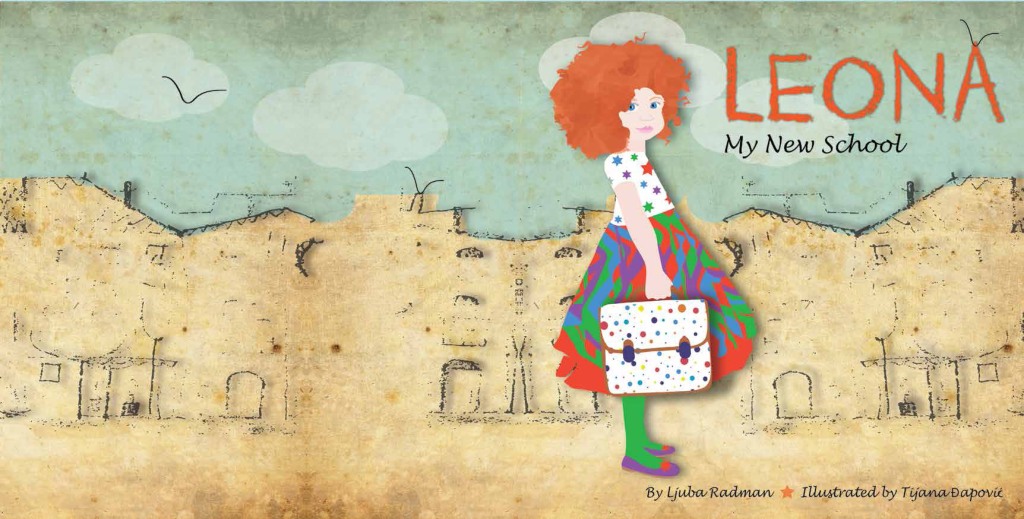
Cover of the children's book "Leona, My new school" by Ljuba Radman and Tijana Djapovic. 
(All rights reserved)
Cover of the children’s book I wrote about Leona, who gets bullied at school.
Text and story: Ljuba Radman, illustrations: Tijana Djapovic (c)

Though my childhood scars did not prevent me from being bullied later on in life, they have helped me develop empathy with others and become an advocate for inclusion and equity. Likewise, this experience has taught me to truly value human kindness for the great treasure that it is.

Oversimplifying the vast issue of victimisation would be a mistake, since these human interactions are extremely complex. Regardless of our best intentions, we all carry the weight of our past, which can taint our behaviour and the way we communicate with each other. But I do think we need to strive to remain critical and introspective, while developing honest communication channels, so that we can continue to grow, both through nurture and pain.

(Title: Quote by Ovid)

“The café counter is the parliament of the people”

Like most of my peers, I was recently infected with the dreaded coronavirus. Surprisingly enough, this turned out to be a blessing, in that it forced me off the hamster wheel and gave me back some time. Time to pause and reflect on our modes of communication. This was triggered by a search through the sea of podcasts for one that would consistently elevate my mind without feeling like a heavy lift. I stumbled upon a remarkable Serbian podcast, which manages a delicate balance of maintaining high quality while being pleasant to listen to for up to three hours per episode. Every week, the sharp and talkative creator and host of “Agelast” welcomes prominent individuals from a wide array of fields, ranging from actors to educators, from physicists to authors, to name but a few.

(The title animation for the podcast series “Agelast”)

What I have found interesting, aside from the audio content itself, is the realisation that over the last two years, I’ve been missing this sort of long conversation, organically flowing from one topic to the next. Most discussions in our lives have been taking place online, which comes with a certain pressure to be succinct and make a targeted point. This goal of being always as concise as possible is particularly emphasized in the work sphere and seems prevalent in north-western cultures. By contrast, the loquacious south-eastern part of Europe allows much more freedom to take time and improvise in conversations. The café culture is particularly strong in these countries, which can be felt even while listening to this podcast. There is room for verbal wanderings – which are highly underrated, considering the fact that they give birth to unexpected gems of thought.

I first recognised this southern cultural trait some 25 years ago in Dalmatia. There, I noticed that philosophy, politics and culture were everywhere, in conversations among ordinary shop owners, workers, pensioners. They would chat at length about the human condition and the universe, quoting Tolstoy, Jung or Descartes in passing. There, I found knowledge and philosophy in the streets to a far greater extent than in New York or London. This was probably, in part, thanks to the heritage of the extraordinary educational system in Yugoslavia. But I believe that what creates fertile ground for such interactions is also the slower pace of life and the ritual of spending hours sipping coffee with friends and acquaintances. Coffee is what you gather around rather than the object of going to a café. And the same creative results cannot be had by taking shortcuts or planning conversations like you would a bullet point presentation.

The measures that have been in place due to the pandemic have interrupted these fertile – albeit seemingly aimless – flows of thought for many. For my friends and myself, it has taken this abrupt break to realise how much our mental health is dependent on intellectual and emotional live stimulation. And though video calls are an acceptable temporary alternative to in-person conversations, they do not allow us the same degree of freedom and unwinding, which require time. Moreover, for many of us, this new reality has meant trading in personal time for work time which, in turn, has resulted in a steep increase in burnout.

Taken from art by Tijana Djapovic (c)

Whereas the term “burnout” is excessively used, it is rarely mentioned that some of the contributing factors are a lack of intellectual stimulation or challenges in the workplace. Pragmatically, we are encouraged to build our careers on what comes naturally to us, what we are talented at, because it is arguably the area that we can reach the greatest heights in by reinforcing our predisposed skills. But if you stick to what comes easiest to you, there is a risk of missing challenges. And where there is no challenge, there cannot be the same ensuing pride you experience upon overcoming obstacles. Hence the importance of possible upwards mobility in companies, so as to encourage employees to reach new heights and challenge themselves if they wish to. And if they do, adequate recognition must also be part of the system, instead of what we are seeing today, namely a carrot and stick scenario, in which only a lucky few will ever get the carrot. The faster you run after the carrot, the less headspace you have for thoughts that would, in turn, feed your creativity and help your mind and spirit grow in unexpected ways. But I digress, as I would in an in-person conversation…

Circling back to my initial point, I find that stopping the race for the carrot has helped me drop my blinkers. This regained vision of a vast horizon also means hearing voices that connect me with a broader world than my own. And where the humoristic and punchy lines of Stephen Colbert, Trevor Noah, Seth Meyers or John Oliver helped me deal with the COVID-world while I was in the hamster wheel, now that I’m off, the long slaloms of “Agelast,” artfully directed by Galeb Nikačević, put this whole experience back in the broader context of all that is human existence. And what’s more, this podcast has inspired me to end my evenings by reading books that have been waiting on my nightstand for months. Thus I would conclude that knowledge breeds knowledge – provided it is shared by the right catalyst.

(Title: quote by Honoré de Balzac)

“Should I stay or should I go?”

People everywhere are slowly resurfacing, after the COVID whirlpool engulfed us all, in one way or another. Since then, several of my friends have been echoeing what I’ve been reading about, namely that now, whoever still has a job should be so grateful, that they are expected to sacrifice everything to keep it.

A dear friend of mine recently asked whether she should stay at her current job, stick it out and keep hoping for a positive change – or whether she should get out before becoming cynical. I’ve decided to share her recent journey and dilemma on my blog, because her experience is a reflection of a general tendency I have observed over the last few years.

Ida is a passionate film producer, who traded her longtime exciting career for a more stable job in a young, dynamic and prominent lobbying organisation. Since she only moved to Belgium a few years ago, and has young kids to provide for, advising her to “throw caution to the wind” might not be the best advice I could give her.

After all, it is true that in this day and age, good jobs are hard to come by. Especially as a forty-year-old foreigner and mother of two. Jobs in organisations that awaken your enthusiasm, working with skilled and kind people are a rarity. And yet, even with such a job, staying is not necessarily the best option either.

During her first year in the organisation, whenever Ida spoke of it, it seemed too good to be true. She could hardly believe it when they hired her, though she was visibly pregnant. And yet, she still feared being fired afterwards, and suffered from the much-talked-about “imposter syndrome”. She thought that being hired must surely have been a mistake on the organisation’s part, as all her colleagues were performing so well and fast. But as time went by, she learned the ropes and got to the same level of productivity and quick thinking as her teammates. As I’ve often observed, mental agility is something one can reacquire quite easily, when motivated. So why should she leave?

Art by Tijana Djapovic

For one thing, even though she was promised a nine-to-five job, Ida regularly ends up working evenings and weekends. Even nights, since she had to take care of her kids after work.

Secondly, in spite of her initial impression that she was working in an organisation with a horizontal structure, the underlying hierarchy seems as present there as in any state administration. The day her manager told her, that he expected her to “make him shine” was the day she realised her chances of advancement were non-existent. Initially, she was led to believe that being ambitious was good, but this rule ended up only applying to management-level employees. Just as the old saying reminds us that “the fish stinks from the head”, one bad leader can ruin the experience of working in any organisation for the entire team.

Thirdly, as time went by, we all saw Ida’s enthusiasm crumbling, as she started seeing cracks in the structure and promoted ideals. For a while, she hadn’t seen them because, as an employee, she was made to feel that she was special. Like in any cult or totalitarian regime, she was repeatedly told how lucky she was to be working in such an organisation. All of us tried to warn her, that the friend we knew and loved was slowly disappearing. But the feedback she was getting at work was that she was “amazing” or “awesome”, which reinforced her perception of being in the best of organisations.

Taken from art by Tijana Djapovic

At first, Ida was thrilled to hear that her colleagues prompted her to “bring her authentic self” to work. But the definition of this authenticity, it turns out, needed to remain within the boundaries set by the organisation.

Like me, Ida has always been passionate about inclusion. So when she saw that this was a major point in their campaigns, she was overjoyed at the prospect of being part of the change she wanted to see in the world. Soon after, she realised that inclusion was only understood through the prism of narrow racial and gender issues. Members of countless underrepresenrted ethnic minorities targeted by systemic racism all over the world, were sorely missing across the board. As well as workers with disabilities, solo caregivers, employees over the age of 50 or talented and experienced individuals with no graduate degree.

I’ve often observed that the success of organisations or companies in today’s fast-paced world is built on hyper-dynamic, driven, young nonparents, ready to sacrifice their nights, weekends and mental health, because they are among the chosen few who are lucky enough to have a great job.

It is easy to buy into a shiny image and professed values, which echo your own. But when the honeymoon phase was over for Ida, and she discovered that the Great and Powerful Oz was an old man hiding behind a curtain, she had a hard time dedicating her energy and time to serving an illusion. In the end, our group of friends all gave Ida the same advice: in this instance, her mind should give right of way to her heart. And in her heart, she already knew that a steady paycheck and perks were lighter on her scale than daily abuse from a narcissistic boss.

Excerpt from “The Wizard of Oz” (MGM, 1939) when Dorothy, Toto and their three companions discover the Great and Powerful Oz.

Many of my friends are now in their forties. At that age, the prospect of climbing back up on the merry-go-round of job seeking isn’t thrilling. But it is the only right decision if you are truly unhappy at work, and still have the opportunity to regain your dignity and enjoy your time on earth.

I, too, have sometimes taken my time here for granted. But these two years of the COVID-19 pandemic partly isolated me from a broader and larger world, than that of productivity and practicality. Which is why I am following my own advice to Ida, and making time to reconnect with friends, family, my broader network of activists and artists – and myself. Both Ida and I have decided to go back to our own creative projects, and also make time for our kids.

And to document this post-COVID chapter, I am trading in my slick MacBook Pro for an old-fashioned paper notebook and pen. Back to the roots we go.

(Title: Song by the Clash)

“42 Up”

Some ten years ago, I watched a documentary film that had a deep impact on how I perceive life. It was entitled “42 Up”. It followed a number of Brits from different regions and social backgrounds every seven years, from the ages of seven to forty-two. I saw them go from being sparkly-eyed kids to awkward teenagers to responsible adults to middle-aged men and women. Some more ordinary than others, some happier, some more successful, some more fulfilled than others.

Seeing the result of this film, spanning over thirty-five years, left me feeling both amazed and sad. What I found in all of them was the inevitable loss of innocence that comes with age and experience. That also went with a loss of ideals in many. And loss of beauty as well. Today, at forty-two, I should watch it again and see how I feel about it. Or better still, I should watch the latest film in Michael Apted’s series that began with “Seven Up!” (1964), which is now “63 Up”. Somewhere along the line, the title lost its exclamation mark… which, incidentally, seems a perfect way to sum up the difference between the ages of seven and sixty-three.

In this COVID-19 crisis, I am fortunate to have a new job that I’m excited about, to have my wide-eyed child by my side, to live in a home and a neighbourhood I love, to be in regular touch with my loving family. But these times of relative isolation have also brought on a new wave of reflection which, combined with the Netflix content I’ve been watching (such as “Marriage Story” or “The Last Dance”) reminds me that life doesn’t turn out the way one expects. Ever. There are unexpected successes, joys, falls and pains. And while love and hope inspire and drive us, suffering and pain play a significant role in shaping us as well. I saw this in “42 Up”, too. There is so much we do – or avoid doing – for fear of being hurt.

(Taken from art by Tijana Djapovic)

Though I don’t believe that we are born as clean slates, I do see us as clay shapes that life hits, carves, moulds over time. Bit by bit, we evolve into complex beings, growing increasingly unique and different from each other, as life adds one texture after another to our initially smooth clay. At middle age, I perceive love and hope in my peers. But none has kept that initial innocence we all used to have. That faith that there will be a “happily ever after”. Because our lives have taught us otherwise. There is no “ever after” as such. There is only happy, then unhappy, then happy again, and so on and so forth. But over time, erosion makes us less affected or moved by unhappiness and happiness alike. Our skin gets thicker, we roll with the punches and we enjoy well-deserved rests after each round.

In this time of contemplation for the whole world, I do appreciate what I have. I also look forward to many more moments of happiness. Even though I know better than to expect what I imagine for myself to come true (in the positive or the negative sense), I do know that joy comes back to me after every struggle. But where am I right now? If I were to do my own “42 Up” recap of my life, it would probably go like this: At age seven, my world was enchanted, almost perfect. At fourteen, it was painful and filled with self-loathing. At twenty-one, it was hopeful and looking to the future. At twenty-eight, it was harsh but glorious. At thirty-five, it was awakened to what adult life is. At forty-two, it is unsettled and I am searching for steady ground.

(Taken from art by Tijana Djapovic)

For three years, I have been feeling like the earth under my feet has been shaking. And, like in a seismic zone, every time it stops, another earthquake rocks the ground I walk upon. And it isn’t easy to build on moving ground. But I have been fortunate enough to join a company built on the concept of constant transformation, flexibility and adaptability. And my travelling companion is a little girl who loves the circus so much, she now excels at finding her balance in any situation like a tightrope walker. What I must now learn from both is not to expect the ground to ever stand still, but rather to function and grow on moving ground. Perhaps by the next seven-year mark, my spirit will be as agile as my daughter’s nimble body.

(Title: Documentary Film directed by Michael Apted)

“Dear, don’t hope any more”

These are the words spoken by dying Beth March to her sister Jo, in Louisa May Alcott’s classic “Little Women”.

Three nights ago a childhood friend of mine passed away. His name was Sasha (Saša).

I remember him as the bright-eyed beautiful boy with a mischievous smile I once knew. Since hearing the news, images of him pop up in my head. I see his face, which his cousin justly described as that of a cherub: rosy-cheeked, curly-haired, sun-kissed and sweet. I hear his voice, his accent and intonation. I especially hear his laugh. Throughout our childhood and early adolescence, he was my brother’s closest “summer friend” (those friends we see every summer, who mean so much to us). He was also the cousin of my closest “summer friend”. And though Sasha and I were not that close, he meant a lot to me. He was my first childhood crush. It was a crush that lasted into my early teens and was reignited every summer for years. I never told him that. I remember the feeling of anticipation before that first annual encounter with him, summer after summer… and my invariably blushing when it happened.

Taken from Art by Tijana Djapovic (c)

For years, our families got together on the Dalmatian island where our grandparents lived. We spent every day together. For the most part, we naturally split into groups: parents with parents, boys with boys and girls with girls. But we were also part of a whole, which reunited one month of every year. A whole that I can now only describe as “a very merry bunch”. To me, Sasha is a symbol of our enchanted childhood summers, of jumping into the translucent Adriatic waters, splashing the tanning tourists, of eating sweet and salty peaches washed in sea water, of excursions to neighbouring islands on our small boat, powered by our Tomos 4 motor, of knees scorched on the island rocks that we used to run on barefoot along the sea, of us kids escaping the house at post-lunch siesta time to play cards in the shade… I also remember one evening when all the families on our street gathered at a nearby hotel for a huge raffle, in which our two families won almost all the prizes. His family won bottles of red wine, ours won a huge leg of prosciutto. For days after that, we all gathered in the evenings to share all that ham and wine on the waterfront.

The enchanted years lasted until the war broke out in Yugoslavia. Sasha’s parents were a mixed couple, so they moved to Canada, where they knew they would be safe. Those were the years of disillusion in so many ways and the island was never the same to me after that. Nor were any of us. We were growing up, and adolescence was a rude awakening for me. Over a decade later, I moved to Montreal. That very first summer in my new country of residence, I visited Sasha in Toronto. I met his girlfriend, who has since become his wife and the mother of his child. I was so happy to see that, in the man before me, there was still that lively, witty, charming boy I’d known and fancied. He had been kicked around by life, as had I. But he had not let the light inside him die. And now it has gone out.

Taken from Art by Tijana Djapovic (c)

Last night, my daughter crawled into my bed after having had a nightmare. In her sleep, she held on to me and said: “I want you to stay with me”. It brought tears to my eyes. Sasha’s little girl wanted her daddy to stay with her too, but he couldn’t. When I received the message announcing his death, I was in the middle of a conversation with a girlfriend who, like me, lives alone with her kids. Just then, we were saying that we couldn’t risk getting seriously sick because our children depended on us. Sasha probably thought the same. All his hope and positive energy, all the love and support of his family and friends were not powerful enough to keep him alive. Life seems to have neither rhyme nor reason, and death takes people away at random. I do not believe that good things happen to good people, and bad things to bad people. Sometimes I even get the impression that the opposite is true. Montherlant’s quote “Wickedness, like alcohol, preserves” often rings true.

Taken from Art by Tijana Djapovic (c)

Thinking of Sasha, I think of all the things he had wanted to experience, and now never will. And I wonder what it is that I want to achieve or experience while I am alive. What do I think I absolutely need to do before I die? The only thing that seems to be essential is being there for my daughter, while she needs me. For the rest, I have ambitions and dreams enough, but when I think of my friend’s death, I feel like none of those really matter. Of course, I wish to write and direct films, to achieve professional success doing something I love, I would like my children’s book to be published and I want to write more, I wish to fall in love again and be loved, I want to dance and sing and see friends and travel. But if I were to leave tomorrow, the great world would go on spinning, other stories would be told, other books would be written, other films directed and other women loved by the men I could potentially fall in love with. Still, no one is replaceable, so when a loved one dies, their family and friends miss them forever. But they, too, go on living. The one person who would be rendered dysfunctional for life by my absence is my daughter. Until she is able to be independent, I am responsible for her health, her well-being, her safety. That is my higher purpose here. The rest is what makes life good, exciting, beautiful, worth living, while I’m here. But it will not matter in the afterlife – if there is such a thing.

And so, once again, my thoughts turn to Sasha and, this time, to his wife. She will have to be strong enough for two now, courageous enough for two, loving enough for two, constant enough for two. I wish her well, and may she never have to suffer such a loss again as long as she lives.

Dear sweet Sasha, may you rest in peace. Počivaj u miru. I shan’t forget you.

In memoriam Saša, 1975-2020

(Title: Quote by Beth March in “Little Women” by Louisa May Alcott)

“The best is yet to come”

Lately, people around me have been telling me that they are convinced the best is yet to come for me. Why or how, I don’t know. Faith in a brighter future for oneself is one of those things that seems to slowly disappear with age.

Art by Tijana Djapovic (c)

Childhood was wonderland for me and, in my eyes, the world was a happy place. Adolescence was a very rude awakening to the darker side of human nature surrounding me. Then came the first chapter of adulthood and the discovery of my strengths and power. This was followed by the second chapter of adulthood, which showed me my limits and brought me to focus my attention on those I love. And now, it’s the third chapter of adulthood. I am still focused on the ones I love, but am gearing my attention back to myself as well, thinking: “Can what is to come really be as extraordinary as what I’ve lived so far?”

After having been starry-eyed, immensely ecstatic, after having created great beauty from scratch and moved mountains, after having experienced magic and had so much energy that it seemed endless… is it possible that what awaits me can compete with what was? Of course, common sense tells us that the future should not have to compete with the past. But that phrase, “the best is yet to come”, does imply that it is compared to what used to be. And this first question gives birth to another, namely: “Do you create your own happiness or does it come to you?” Some friends tell me I should stop thinking and just do: write, network, organise my time as best I can, do as much as I can during my waking hours, because action breeds reaction. Effort generates results, including positive ones. Meanwhile, other friends tell me to do less, to let go, to open up and have faith that what must be will be, that relaxing and welcoming change will bring it about effortlessly.

Taken from art by Tijana Djapovic (c)

The confusing thing is that my personal experience can confirm both affirmations. And neither. Over the course of my adult life, so far, I’ve noticed that when I set my mind to something, I usually did make it happen. The price to pay for that was always the problem: whether financial, emotional or physical, there was always a price to pay for my great ambitions. What my experience has also taught me is that every once in a while, when I would give up on pretty much everything and just accept the fact that I needed help, help would indeed come. I would have meaningful encounters and good things would be born out of them. But this time around, neither approach seems to work as it once did, because I am not the same person as I once was.

These days, I find I am juggling, wrestling, running, quitting, falling flat and getting back up on this court known as my everyday life. Where I had come to grasp the laws that governed the unidimensional universe I used to be in, I am struggling to see the logic of the multidimensional universe I am living in now. The pace of it all has increased, the layers of complexity have multiplied, I have difficulty distinguishing true faces from masks. What used to be true no longer is. And meanwhile, my motivation and stamina are out of breath. So I guess the best thing for me to do now is to just wait and see what tomorrow brings: a bull to take by the horns and ride into the sunset – or a hammock to stretch out in while waiting for the sun to shine on me.

(Title: Song written by Carolyn Leigh)

“I should have been a great many things, Mr. Mayer”

I guess turning forty is that point in your life when you look back and think of all the other ways your life could have turned out, all the “yous” there could have been.

The first time that thought crossed my mind, I was thirty-six years old and pregnant. My husband and I were spending time on the same island as every summer. We were discussing life, emotions, possible futures with a group of girlfriends, all in their late thirties and early forties, all of them artists. We talked a lot about the choices we had made, the paths we had followed  – and the ones we hadn’t.

Two of these friends are sisters: one a former pianist who had given up this difficult career in search of a new identity, the other a choreographer and dancer who had never made it past the level of production assistant in the hierarchy of a royal ballet company. They inspired me to write the plot for a short film in which they would act as alter egos. In it, the first would be quietly reading at home, reflecting upon her life, reminiscing, questioning her choices, including that of having given up dancing in her youth. The other would then appear and dance around the house, enticing and flamboyant. One character having chosen the path of stability, peace. The other that of an unpredictable roller-coaster-like existence. At the end of the film, these two sides of the same woman would have to face each other, accept each other without judgement. Since life is not black or white, made of good or bad choices, there could not be a moral to the story. They had both simply had lives that were the result of their choices and of chance.

Art by Tijana Djapovic (c)

Gradually, as our little group of artists shared views on this theme, my idea for a film evolved into a photography project we called “Feminae et insula” (“The women and the island”). We started imagining a parallel universe in which all our potential alter egos coexisted on this island. I could picture all the women we could have been, had we chosen different paths, living side by side all over this piece of eight square kilometres. My husband was going to take pictures of us in the various roles we had envisaged for ourselves throughout our four decades on Earth. I, for instance, was going to be photographed as an opera singer and a film director, a flamenco dancer and a pastry chef, a stay-at-home mom and a writer. All these paths I could have followed or stayed on. Finally, our project evolved into an exploration of feminine identities, roles, interactions and innermost feelings.

When I came up with the initial project, it was a way for me to deal with my budding regrets. With age, I find it harder to focus only on the present, despite all the talks I’ve listened to about mindfulness. My mind strays and takes me on journeys into my past where I encounter all the hopes and plans I had for myself with each new milestone. And there have been many milestones along the way: I was off to university at seventeen, working on a musical for the first time at nineteen, working in film production at twenty-one, returning to the world of theatre at twenty-four, writing, directing and producing a musical play at twenty-six, founding, building and running an international festival and a non-profit organisation at twenty-seven, being invited as a public speaker and activist in several countries at thirty, writing and directing a short documentary at thirty-three, writing my first fiction screenplay at thirty-five, a children’s book at thirty-seven, my first magazine article at thirty-eight, founding an events company at thirty-nine and starting a blog at forty-one.

And still, like Jo March, every so often I catch myself thinking: “I should have been a great many things.” But I only have one life. I know exactly why I chose the paths that have led me here today. My decisions made perfect sense at the time. However, in the grand scheme of things, unlike fictional characters, I cannot say that I would do it all again. I would do some things differently. Not all of them, but some most definitely.

Thinking back on “Feminae et insula” I think: Who knows? Perhaps there really is an island where my alter egos exist, somewhere in the universe. If so, I would dearly love to meet them someday and see what they have to say…

(Title: Quote by Jo March in “Little Women” by Louisa May Alcott)