“Diversity must be preserved, so that it can bear fruit for the common good”

For an article we recently wrote about diversity in Brussels, my collaborators and I asked people of various backgrounds what word they most associate with “diversity”. These are some of their responses: the world, respect, colours, openness, equality, togetherness, multiculturalism, discovery, richness.

What is Diversity?
To me, diversity means everything – or, in a strictly human context, everyone. This includes all the existing human diversity of gender, ethnicity, socioeconomic and cultural background, experience, interest, age, ability or disability, sexual preference, political view, character trait, type of intelligence, sensitivity, and the list goes on.

Taken from art by Tijana Djapovic (c)

The meanings attributed to the word ‘diversity’ are as varied as diversity itself. Surprisingly, many now have a negative undertone. In the wake of the opening ceremony for the Olympic Games in Paris, and of Vice President Kamala Harris becoming the US presidential candidate for the Democrats, I hear the term diversity being used to signify, among other things, non-Caucasians, “unwanted” immigrants, members of the LGBTQIA+ community, women, disabled individuals. There is also the recurring derogatory expression “DEI hire”, used to imply the lowering of standards to include members of underrepresented groups – thereby ignoring their hard-earned achievements or qualifications.

I don’t understand how, in democratic countries, diversity could come to be a denigrating term. In the United States, the very people who cite George Washington as a national hero are disregarding his vision for the country: 

“I hope ever to see America among the foremost nations of justice and liberality.”

― George Washington

Since “liberality” means “the quality of being open to new ideas and free from prejudice”, it is obvious that many Republicans have moved away from this ideal. This growing tendency has been spreading across Europe as well, although on “the old continent” the messages of hate and fear towards the representation of diversity are almost exclusively carried by acknowledged far-right groups and movements – as yet.

The 2024 Summer Olympics Opening Ceremony
While watching the Paris Olympics opening ceremony in its entirety, I anticipated that most conservatives would be shocked by some of it. Nevertheless, all I could see in it was the celebration of the French Republic’s ideals: those of Liberty, Equality, Fraternity – to which they finally added Sorority in this very ceremony!

Excerpts from the Olympic Games Opening Ceremony

I saw the celebration of a diversity which has existed in France for centuries, but had never been shown so publicly. The ensuing public outcry across conservative media outlets and social media worldwide completely missed the point being made. They failed to see the admirable and forward-looking valorisation of beliefs, people and historical facts that have made France what it is today. Some of these were the infamous beheaded queen Marie-Antoinette, Gallo-Roman goddess of the Seine Sequana, a polyamorous trio reminiscent of the well-known (and oh! So French) “ménage à trois”, Malian-born French singer Aya Nakamura, joined by the French Republican Guard and the Army Choir to pay tribute to French-Armenian singer Charles Aznavour.

The four-hour-long ceremony highlighted innumerable successes, and overwhelming artistry and diversity. Throughout it all, the message of love and inclusion was omnipresent. But with a quick search on Google, almost all you can read about this impressive show now are messages of indignation and anger, focussing on a very brief and vastly misinterpreted segment. This is indeed what certain popular media and social media have been doing for decades, taking segments out of their context, giving them an erroneous interpretation, and crying out for violence. We are not far off from angry mobs of the past, armed with torches and pitchforks, getting ready for a witch-hunt or lynching.

Kamala Harris
Similar messaging could be heard all over right-wing media regarding Kamala Harris, when Joe Biden decided to step down as a presidential candidate in favour of his VP. One of the most shocking reactions came from Trump’s former Deputy Assistant Sebastian Gorka, in an interview on conservative British news channel GB News. He described Harris as: 

“This woman, this disaster, whose only qualification is having a vagina and the right skin colour.”

― Sebastian Gorka

Jon Stewart (The Daily Show) shows clips of reactions in American right-wing media about Harris as the new Democratic presidential nominee.

Such level of uneducated crudeness still manages to surprise me. What people like Gorka claim diversity implies has nothing to do with what diversity really is. Rather than fuming, I decided to reflect on what that word means, what it represents, and why it is so scary for many.

Diversity is a definite fact on this planet. It is not new. It is not the dream of a “woke, leftist, liberal, progressive culture”. It is a reality. The definition of diversity is:

“The condition or an instance of having or being composed of differing elements or qualities.”

Merriam-Webster

Diversity has always been here, and it has ensured our survival, whether in the form of biodiversity or human diversity. However, there have always been people trying to erase part of this diversity. Interestingly, the groups of people who have sought to annihilate cultural diversity often overlapped with those who sought to destroy or subdue species in the natural world. 

Destroying Diversity
Last year, I visited an exhibit at the Paris Gallery of Evolution to rediscover some of the most noteworthy extinct animals in augmented reality. This experience made me reflect on the many similarities between those who have been destroying biodiversity, on one hand, and colonisers, Nazis, or any other genocidal group or regime, on the other. The latter include all who have sought to eliminate an ethnic group, or so-called “race”, throughout recorded History. It is interesting to note that, just as genocides have been denied by right-wing groups, the emblematic dodo’s extinction in the 17th century was not recognised until two centuries later, partly for religious reasons. Perhaps it is no coincidence that one of the first steps towards building up hate in a population against another is to dehumanise any scapegoated group, and compare them to animals. 

Taken from art by Tijana Djapovic (c)

A safeguard against extinction
From a genetic standpoint, diversity is fundamental to the health and resilience of all living beings on this planet. A population with high genetic diversity is better equipped to handle challenges. In the face of diseases, genetic variations in individuals are key to providing resistance. Therefore, genetic diversity safeguards against extinction by ensuring a variety of traits and characteristics. 

It is clear to me that the same could be said for any diversity. As the Danish ad below showed very clearly, we are diverse well beyond our appearances. We are all part of a multitude of groups. Thus, only highlighting one categorisation provides an incomplete image.  

TV2 Denmark advertisement showing many ways to group people instead of the obvious ones (e.g., gender, ethnicity).

Since we have now nearly all been given a voice on social media, I do not see why all the existing human diversity shouldn’t be reflected and protected in popular culture as well. And yet, among the people using these very channels, asserting their right to a voice, more and more want to silence all who do not agree with them. They each want to ensure their own narrative is the only one that remains, thus erasing any diversity of opinions, if not cultures, preferences, backgrounds of any sort. 

The Danger of a Single Story
A few years ago, I attended a video conference given by Nusrat Durrani on the importance of nurturing and growing diverse stories and narratives in audiovisual content. He shared his dream of a world in which the stories we read, hear, and see, would reflect all groups, cultures and experiences from a variety of perspectives. Another admirable and charismatic figure who spoke about the danger of a single story is Chimamanda Ngozi Adichie. This awe-inspiring author eloquently explains that creating a single story is:

“(to) show the people as one thing, and only one thing, over and over again – and that is what they become. (…) The single story creates stereotypes, and the problem with stereotypes is not that they are untrue, but that they are incomplete. They make one story become the only story.”

Chimamanda Ngozi Adichie

Chimamanda Ngozi Adichie’s TED talk about the danger of a single story.

I have been repeating that same message for decades. As a Roma Rights creative advocate, whenever I organised events about various Romani cultures, history, and current struggles, I ensured they were represented by Roma who were as diverse in appearance as in their experiences. This approach aimed to expand the audience’s perception of those they called “Gypsies.” The admirable Romani filmmaker and activist Katalin Bársony made the short film below, using this very duality of clichés and a broader reality, to portray European Romani women’s complex identities. The far-right, on the other hand, has been blinkering people to show only a very small segment of any population they attack, and equating this small segment to the whole vast group.

Short film made by Katalin Barsony for the “I’m a European Roma Woman” campaign

A Loss of Privileges
A possible explanation of why this has caught on is that a small percentage of the world’s population, who were born with certain privileges, fear losing them. Even acknowledging these privileges seems to be a problem. As a White lower middle class middle-aged woman, I can understand the fear of losing the relative comfort I have been used to. Although I am far from being rich, and have had to endure my fair share of exclusion due to my gender, socioeconomic background, or even ethnic origin, I am well aware that my life has been much easier than it would have been in the same situation had I been of African, Middle Eastern, Latin American or Asian descent.

While most people around me are better off financially, I still enjoy many privileges, most of which I’ve had to work hard for. And although I live with a certain fear of losing these privileges, it is not because of people of any particular ethnic or religious background. Any fear of losing my privileges is tied to the economic crises we have experienced, as well as the free market economy and speculation, and the people who control these. Therefore, I do not understand White people’s fear of losing their privileges by the mere fact of recognising the past sufferings and ongoing unfair, unjust, and racist treatment of people of colour. 

We need Diversity
Finally, just as preserving biodiversity is absolutely essential for our survival as a species, I believe that diversity of thought is essential to a healthy evolution of the human race. Simon Sinek clearly explains why a diversity of perspectives challenges and motivates us to be better, whether in the workplace or at home.

“You need the diversity and inclusion to see opportunity or see (…) gaps, because we all have different perspectives, different upbringings. Not better or worse, but different. (…) We all have our own unconscious biases and we all have our own blinders, but together we have a broad view.”

Simon Sinek

Simon Sinek speaking about diversity and inclusion, and why it is necessary.

In spite of the rise of far-right groups spreading a discourse of intolerance, fear, and hatred, I remain hopeful. The fact that such an opening ceremony was possible for the Olympic Games in Paris, is already a giant step forward for our joint humanity. It highlighted the beauty of diversity, and the importance of including people of all cultures and sexualities, but also the often disregarded elderly and people with disabilities. I am also hopeful for the upcoming presidential elections in the United States, despite all the warnings that if Kamala Harris is elected, a schism will happen within the country.

When I hear how young people around me speak of gender, multiculturalism, disabilities, I am very hopeful indeed. I believe that, faced with the real threat of autocracy, the people who believe not just in equality, but in equity, will continue to push our societies forward towards a more just world.

As Ruth Bader Ginsburg remarked on the value of diversity:

“We will all profit from a more diverse, inclusive society, understanding, accommodating, even celebrating our differences, while pulling together for the common good.”

Ruth Bader Ginsburg (Speech given at the Paris Institute of Political Studies graduation ceremony, 2009)

(Title quote by Jacques Delors, politician and architect of the united Europe we know today)

“To thine own self be true”

As one year has drawn to a close and another begins, I am looking back on my overall experience of the past twelve months, while contemplating what the coming year might bring. 

4 works of art by Tijana Djapovic (c)

In this time of transition, mainly what I see and feel around me is a general wariness. Some believe it is related to our growing anxiety linked with the ongoing wars that affect us, either directly or indirectly. Others feel that it is tied to the escalating dehumanisation of our society, in correlation with the fast expansion of AI and our post-COVID isolation (see my post about mental health issues and fear). The obvious impact of ever-rising prices on a shrinking middle class is certainly also part of the equation. However, even if we cannot necessarily influence these global issues, what we can do is change certain aspects of our lives.

Thus, in the spirit of Anne Shirley in the children’s classic “Anne of Green Gables”, I want to step into the new year thinking:

“Tomorrow is always fresh, with no mistakes in it.”

“Anne of Green Gables” by Lucy Maud Montgomery

This last year has decidedly taught me that it is never too late to change course. I have recently come to yet another fork in my road, where I need to choose between two paths, both of which offer advantages and disadvantages. In simpler terms, one provides creative freedom at the cost of financial stability, while the other offers the opposite. 

With this in mind, I remembered Polonius’ popular words to Laertes, in Shakespeare’s “Hamlet”:

“This above all: to thine own self be true,
And it must follow, as the night the day,
Thou canst not then be false to any man.”

Hamlet” by William Shakespeare

But what does it mean to be true to yourself? There are many aspects to each personality and sides to the prism of who you are. So, which “Self” are you meant to be true to?

Excerpt from the teen comedy “Clueless” (1995), showing how present this Hamlet quote is in popular culture

Both paths stretching out before me are in line with equally valid sides of my Self. One is my rational and reasonable “left-brained” side. It listens to my need to provide my child and myself with a stable existence, which is by no means to be undervalued. By doing jobs that I had some interest in, but no passion for, I have been able to pay the rent and spend quality time with my daughter. And then, there is the “right-brained” path, which is aligned with my irrevocably creative nature. Despite all my past efforts to function without it, my creativity has proven to be a resilient creature which will not be silenced. But unlike in Hollywood films, the path of passion never miraculously provided financial stability just because I dared to quit a paying job to follow my dream. 

Top 10 Movies That Make You Want to Quit Your Job

This duality within me has repeatedly swung me back and forth between jobs for money and jobs for the soul. And now, this pendulum has swung again towards my creativity. Although creativity is often mentioned in the corporate world, in my experience it is seldom seen as a desirable quality in employees. It is, after all, somewhat of an untamed beast, in direct opposition to the culture that has shaped the West and been enforced by colonisers – past and present. Creativity does not care about hierarchy or the establishment.

“Giallo” by Tijana Djapovic (c)

And as of recently, the “creative beast” which had restlessly been awaiting her time to be set free once more, has resurfaced in my life. Suddenly, doors that had been closed are opening onto new horizons. And just like that, a short story I wrote with no expectations, based on the lives of both my grandmothers, was published (order “A Story of Two Europes” here). I was then selected to participate in a programme for writers-directors with budding projects, organised by mediarte. During those few days of open and honest interaction with a dozen young filmmakers, I found that I was among “my tribe” again. We were not there to earn money nor promote ourselves, but to learn how to best feed and nurture the projects we so care about.

During this programme, one of the trainers emphasised the importance of living by our values and seeking joy in our daily work. The term “joy” stood out for us all. Perhaps it is because in our society, we are so focused on being happy that we forget about joy. And while happiness is vague and vast, joy is an identifiable emotion that can be ignited in many situations. Moreover, the pursuit of happiness can be weighed down by expectations about it. We all know people who thought they would be happy once they found a partner, got a lucrative job, had a child, only to find that achieving this goal did not live up to their vision. Joy, on the other hand, can readily be found in smaller undertakings and successes. As French philosopher Frédéric Lenoir writes:

“More intense and deeper than pleasure, more concrete than happiness, joy is the manifestation of our vital power.”

“The Power of Joy” by Frédéric Lenoir

I have often been in situations where I traded in joy for a paycheque, and have found that this inevitably creates a crater in the soul. It leads to needing psychological crutches to support you, such as buying material goods, turning to that “wine o’clock” big glass of Chardonnay, eating more than you should, just to make up for what you are denying yourself. After all, everything comes at a price.

Lately, another experience challenged my perception of the choices I’ve made, and the ones I want to make going forward. My childhood hero, the beautiful and exceptionally talented Petro Ivanovitch, passed away. This celebrated Romani (Gypsy) musician and singer was a dear friend of my family and played a significant role in my grown-up life. Our regular visits to his family’s chic Paris restaurant “Les Tziganes Ivanovitch” – always filled with the crème de la crème of Romani performers and celebrities – later led me to write and direct the musical play “Romano Drom” about the Roma people’s history and to create the Romani culture festival Romani Yag.

Les Tziganes Ivanovitch”: Petro (centre) with his beloved brother Slobodan, who died in 1985 (right), and Andrei Chestopaloff (left).

Petro’s passing made me look back on my eight years of passionate and committed work to shine a light on the diverse abundance of Romani culture worldwide. Despite numerous hurdles and tests, I had managed to gain some notoriety for the work I was doing internationally to bring together Romani arts, culture, activism, and information, in order to challenge the old narratives about “Gypsies”. But over time, continuous attacks by opponents to my festival or to me tainted my enthusiasm and wore me down. Just like in the fable about The Little Red Hen, I’ve heard many stories from individuals who worked hard towards a laudable goal, all the while having to fend off envious and frustrated antagonists who only saw the results and glory, and not all the hard work that had made it possible.

At this point though, even if I often regretted having left my path with Romani Yag behind, I have become kinder to myself, and now see regret as:

“a fundamental part of how [we] learn to reason and make decisions (…) Our cognitive apparatus is designed at least in part to sustain us in the long term, rather than bomb us in the near term. We need the ability to regret our poor decisions (…) precisely so we can improve those decisions in the future.”

The Power of Regret – How Looking Backward Moves Us forward” by Daniel H. Pink

What I have learned from this is never again to quit a path I believe in because of external pressures. And I will try not to walk this path alone. As you age, what you lose in availability and energy, you need to make up for by surrounding yourself with the right people. A middle-aged filmmaker I know recently hit the nail on the head when he said that, while you are young, energetic, and free to dedicate all your energy to just one venture, you can fight your battles alone. But as time passes and your duties multiply, it is wise to share the burden of responsibility with trusted collaborators, partners, family, friends. 

Thus, at the dawn of this new year, I will choose a path that is as close to an intersection between my different authentic selves – the elusive “Ikigai“. And I encourage others to do the same if they do not experience a healthy daily dose of joy in their lives. If we can, we should strive to live in line with our core values and our intrinsic nature, despite anyone who might try to format us. For me, this entails birthing my creative projects that had been sitting on a shelf for years, untouched but never forgotten.

(Title quote taken from Shakespeare’s “Hamlet”)

“Thoughts arrive like butterflies”

From my mid-teens to my mid-twenties, I was an unconditional Pearl Jam fan. I had all their albums, went to their concerts, knew the lyrics to all their songs by heart, and Eddie Vedder’s poster hung on my student room wall. To this day, I admire their body of work. They were the voice of the Western world’s nineties youth, addressing all the uncomfortable truths of that generation. The chorus of their song “Even Flow“, about a homeless man, begins with:

“Even flow, thoughts arrive like butterflies
He don’t know, so he chases them away.”

“Even Flow” by Eddie Vedder and Stone Gossard
“Even Flow” by Pearl Jam – lyrics here

I have often remembered this line, as my mind is regularly stormed by thoughts I want to chase away. Lately, I find that in order to stray my mind from unwanted cerebration, I’ve been listening to audio books, podcasts and series to control what populates my brain. This constant influx of content may feed my mind, but at the same time, it tires it and slowly stifles my creativity.

In the Croatian documentary film “Spomenko”, directed by my ex-husband, the exceptional and nonconformist priest, to whom it is dedicated, mentions the importance of solitude in processing all that constitutes our everyday lives.

Full documentary film “Spomenko”* by Bruno Lovrenčić and Dražen Nenadić (Croatian with English subtitles). Passage about the importance of solitude: 5’40”-7’10”.

Our minds need to breathe. They require a break from input in order to create relevant output. And yet, many people cannot handle silence. They go so far as to listen to audio content (whether guided meditations or music) while they sleep. My goal is not to criticise the tools individuals find to cope with whatever is weighing them down. Rather, I wonder if we are not overburdening the brain with never-ending flows of words, thoughts and emotions from the outside in.

Likewise, I am dubious about the overall benefits of brief daily meditations. However helpful, I wonder if they can truly suffice to let the dust of our emotions, encounters, worries and plans settle, which is necessary to try to make sense of it all. As a society, we have been moving faster and faster, and while we are trying to focus on the positive aspects of our existence, we cannot shut out the negative, like we do on our social media profiles. We must learn to live with thoughts that may eat at our brains like bugs. Perhaps we should even welcome them, since countless uneasy questions, worries, sadness or anger, have given birth to an invaluable wealth in art and philosophy over centuries.

Taken from art by Tijana Djapovic (c)

The problem now is that, for the first time in history, we have access to an infinite source of distraction and information. This puts us in a position of constant reaction to what we hear and read, as a way to externalise the impact this influx has on us. We are on the receiving end, rather than being the instigators and creators of original thoughts. Whereas welcoming silence and solitude is more challenging in the moment, it brings with it more peace of mind in the long run. And more creativity, too.

As I look out onto the pristine Adriatic Sea, sitting on what was once my grandparents’ terrace, high above the madding crowd, I have made the decision to pause the constant input from my phone. I have taken out the faithful companion that is my notebook and am finally writing again – letting the butterflies back in to fly around my head, come what may. Time to slow down again and just be, and let be. Life is not a long quiet river.

The view from my late grandparents’ house

Life is not – nor can it be – a constant source of joy, excitement and gratitude, even when all is well. It is a complex multitude of layers, experiences and emotions, tainted by fears and insecurities, highlighted by joys and serenity. And it is certainly much easier to be offended, complain or be envious of others, than it is to accept what is. But acceptance is necessary at times. As is said in the Serenity Prayer, made famous through its use in AA groups and subsequently in popular culture:

“God, grant me the serenity to accept the things I cannot change,
the courage to change the things I can,
and the wisdom to know the difference.”

More about its source here

Acceptance is not resignation. Rather, it is about letting the dust of the daily hustle and bustle settle, letting the fog of injustice, aggression, excitement and euphoria clear up. Only when this happens can we see more clearly, and act rather than react. Swift reaction may well be essential when you are in danger, but it is usually shortsighted and can ultimately misguide you in any other context.

Taken from art by Tijana Djapovic (c)

Quieting the voices in our heads by turning on our phones is in some ways comparable to escaping reality through drugs. And like drugs, the relief from our thoughts and emotions that we get through this content is short-lived. What awaits us at the other end is the same feeling of helplessness or the overwhelmingness of everything. This drives us to continue using our “escape-drug” to remain distracted. Detoxifying your mind by only using your phone when you actually need it may take a few days, but I am noticing the positive effects in me already.

My mind is slowing down, the jumbled puzzle pieces are slowly falling into place, allowing me to breathe and make lucid decisions. As the dust is settling, I can see the green fields with colourful butterflies again. For now, I’m just letting them fly about – until I catch one, when I’m ready.

(Title quote taken from the Pearl Jam song “Even Flow”)

*In memoriam Luka Lovrenčić, cinematographer on “Spomenko” (1978-2015)

“Tears are words that need to be written”

Lately, I have found that whichever conversation I have, or whatever I read about, the topics that come up are exactly the ones I have been writing about on this blog. Among them are isolation, screen addiction, absence of community, bullying, powerlessness, desensitisation, lack of nuance, obsession with performance, and this giant corporate monoculture that keeps on spreading. There is also the issue of the “Potemkin village“-like society we live in, where the façade of forced optimism is meant to erase all underlying injustice and imbalance.

Art by Tijana Djapovic (c)

What I draw from this is not that I am exceptionally perceptive, but rather that we are all suffering of similar aches. Some are just better than others at concealing it. Generally speaking, our mental health is damaged. In many cases, this even affects our physical health.

Some argue that having mental health issues is a luxury reserved to the wealthy. Others, in turn, consider that only the weak will be afflicted with mental health issues. But I would beg to differ with both these views. These kinds of simplistic statements remind me of one I recently heard from an elderly woman I know: she said that in her childhood, bullying did not exist among kids. Of course, one just needs to read the classics, like Jane Eyre, to know that this is not true. But what this woman’s view reveals is that bullying was not considered or treated as a concern back then. And the same can be said for mental health issues, which were not recognised until fairly recently.

A century ago, and all the centuries before that, most of the population constituted the working class, working fourteen-hour days. They certainly had mental health issues, but the option to diagnose and treat them did not exist. Still, they managed to function, but at what cost?

Art by Tijana Djapovic (c)

As mentioned in a previous post, our mental health has been affected by our gradual isolation, exacerbated by the lockdown and the resulting post-COVID social patterns. These include working from home, having food delivered rather than eating out, ordering everything instead of going to shops. Likewise, the digitalisation of every service we use has led to increased screen time, and while we all know that spending too much time watching a screen is detrimental to our mental health (as is clearly explained in this article in Time Magazine), it is very difficult to escape this trend.

Moreover, in our navel-gazing culture, our obsession with ourselves removes us from a journey towards balance. Instead, it forces us to turn inwards and dissect every part of our own behaviour and emotions, thereby further isolating us. It is a rabbit hole from which it can be challenging to resurface.

Understanding and categorising our emotions is certainly important. As we have seen, individuals who are disconnected from their emotions are likely to misidentify sadness or fear as anger. This can easily lead to outward violent behaviour or to inward eating disorders, to compensate for feelings of powerlessness, loneliness or frustration. This is why, early on in my child’s life, I started reading books to help her identify her emotions, such as the excellent “The Color Monster” by Ana Llenas.

Ana Llenas’ “The Color Monster”, read by Joshua Brooks

But identifying and labelling your emotions is only the first step. Once that is done, you still need to process them, and act or react. Physical activity is recommended, as it helps channel (self) destructive energy. And yet, I don’t believe that this is enough. Nor is listening to 5 minutes of daily affirmations on Headspace or similar apps. These habits do help, but there is no quick fix for deeper-rooted problems and a dysfunctional structure.

In my post about victimisation, I mentioned the key element of fear, as a tool of manipulation. Employers, media, heads of state knows this well, and make use of it on a daily basis to steer us in the intended direction. They have planted seeds of fear in us and have continuously nourished them, thereby slowly reducing the spectrum of our freedom and power. I don’t believe that any amount of running or meditation can resolve this issue. So I have started digging into the notion of fear.

In Michelle Obama’s recent book “The Light We Carry: Overcoming in uncertain times“, she talks about being “comfortably afraid”, which is an interesting concept.

“What does it mean to be comfortably afraid? For me, the idea is simple. It’s about learning to deal wisely with fear, finding a way to let your nerves guide you rather than stop you. It’s settling yourself in the presence of life’s inevitable zombies and monsters so that you may contend with them more rationally, and trusting your own assessment of what’s harmful and what’s not. When you live this way, you are neither fully comfortable nor fully afraid. You accept that there’s a middle zone and learn to operate inside of it, awake and aware, but not held back.”

“The Light We Carry” by Michelle Obama (2022)
Michelle Obama talks about fear, and how it narrows your perspectives, as well as isolating you from others

Fear is often seen as something we need to either overcome or avoid. We are seldom taught to live with fear and accept it as an integral part of our life experience. When we are young, we are much more inclined to challenge our fears and ourselves. But as time goes by, as we build a life for ourselves and our family, we seek security. And human security is founded on freedom from fear.

The UNDP’s Human Development Report stresses that “there have always been two major components of human security: freedom from fear and freedom from want.”  These ‘two freedoms’ are often considered the ‘twin pillars’ of human security.

United Nations Development Programme – Human Development Report 1994

As security sounds comforting, we accept the ever narrower range of action that is offered to us, as long as we are promised the removal of what we have been told to fear. Each planted fear closes a door for us. Michelle Obama also mentions a parent’s fear for their child, which I understand deeply. My fear for myself was never as great as that for my child’s safety and wellbeing. As Hanya Yanagihara writes:

[The love for one’s own child] “is a singular love, because it is a love whose foundation is not physical attraction, or pleasure, or intellect, but fear. You have never known fear until you have a child, and maybe that is what tricks us into thinking that it is more magnificent, because the fear itself is more magnificent. Every day, your first thought is not “I Love him” but “How is he?””

“A Little Life” by Hanya Yanagihara (2015)

But even this fear is one that we must all learn to live with if we want our kids to grow wings.

Taken from art by Tijana Djapovic (c)

Today, so many people live in comfortable situations, that they are inclined to sacrifice their intangible wealth (such as freedom of thought or community) in order to keep their material one. The more they have, the less they dare. It is no coincidence that the people who built the American Dream had little or nothing to lose. Today, I do not believe that we can reach the same heights because we have too much to lose.

This is not to suggest that we should suffer and endure poverty as our ancestors did, just so we can build a new worthwhile dream. Rather, I wonder if the path back to mental health could be one where we accept fear as our daily companion. Perhaps master manipulators might then lose some of their hold on us, and we might venture to seek untrodden paths.

Art by Tijana Djapovic (c)

This could begin with small steps, such as sharing knowledge and ideas, without being obsessed with patents and trademarks. For me, that step was simply writing this blog. Through “Midlife Reflection“, I began sharing my emotions and failures publicly, writing words to replace the tears I was shedding – just as in this post’s title quote by Paulo Coelho.

If you can find the source of your tears, I believe you can find a way to turn them into words or actions that, in turn, might help others. And this could be your path towards mental health, balance and “comfortable fearfulness”.

(Title: Quote by Paulo Coelho)

“A time when decency has lost its hold on the public imagination”

I recently watched the first season of “The Diplomat“, which I thoroughly enjoyed. In it, one line caught my attention: David Gyasi‘s character, Austin Dennison, says to Keri Russell‘s Kate Wyler: “Perhaps you’re just a decent person in a time when decency has lost its hold on the public imagination.” I completely agree with this statement. This is not to say that people are less decent or kind than before. It’s rather that decency is generally no longer valued or exemplified the way it used to be.

Although quotes about kindness have become popular, it is not encouraged in practice. We would like to believe that being kind is better than being successful, but we know that in our society, success is more important. Perhaps it is so because, contrary to kindness, success is measurable. Thus, kindness is rarely valued, and it is mostly perceived as naivety or weakness.

Works by Tijana Djapovic (c)

Morality and etiquette, too, are outdated, as they are associated with a formerly oppressive and rigid system. But it seems the pendulum has, once again, swung too far in the opposite direction, and we have thrown the baby out with the bathwater. In our struggles against an overly hierarchical and stifled society, in favour of an equally exaggeratedly individualist one (as I mentioned in my previous post on current individualism), we have exchanged what was beneficial in our old codes of conduct for personal freedom and success as absolute priorities. Helping others requires energy and time that, according to today’s set of values, you should be spending bettering yourself or being kind to yourself.

In the corporate world, this is particularly noticeable. Regardless of the principles preached in giant tech and entertainment companies, where “brilliant jerks” are supposedly not welcome, the reality is that the said jerks and toxic managers are celebrated, as long as they bring measurable results and exceed KPIs. In this new world, employees are encouraged to act as though they care, but without actually getting involved. The unwritten rule is that your colleagues are supposed to ask you how you’re doing, and you’re expected to reply: “Great! Amazing! Awesome!” But no one is meant to be sincere, or to truly listen. What I have seen is that in the corporate sphere, helping people in need is done by donating money to a charity, and then patting yourself on the back for being such a decent human being. That way, you don’t have to get your hands dirty, and whatever you give is tax-deductible.

Taken from art by Tijana Djapovic (c)

All of this differs greatly from the decency that was once taught, albeit as part of a broader set of restrictive rules. The forced “respect for elders”, which I am against as an absolute principle, did however ensure that young people helped the elderly who needed it. The fear of God, however constrictive, did come with rules that demanded charitable actions. I find there is a lack of nuance, which prevents us from perpetuating what was best in our old sets of rules, and combining it with our recently found freedoms. It seems everything has to be one or the other, black or white, good or bad. Perhaps the digitalisation of our planet, built on binary coding, is pushing us to view everything through a binary lens.

When Simon Sinek talked about performance versus trust, he clearly explained why companies should rather seek trustworthy employees, rather than simply high-performing ones. As he says:

“What we end up doing is promoting or bonusing toxicity in our business.”

Simon Sinek (“Trust vs performance)

This is because valuing numbers over human qualities is deeply ingrained in the corporate identity. While our colleagues may give us mugs with inspiring phrases about kindness and empathy, we are taught to avoid what requires energy if there is no guaranteed selfish profit. And though none of this is new, what shocks me today is the massive gap between what we say and what we do. Or rather what we are told and what is expected of us. Indeed, what is shown in ads or company culture is consistently at the opposite of what is actually being rewarded in these environments.

We speak and hear of authenticity, of empathy, of thinking outside the box. And yet, even though companies are now much more tolerant regarding employees’ appearance, if one looks past the diverse hairstyles, tattoos, piercings or other – all of which should express actual individuality (not individualism) – what remains are people who are formatted, similarly to past generations. They have just replaced one set of goals for another, and decency or kindness are not among them.

When I think of these values, I remember an eye-opening awareness campaign on Quebecois television about homelessness. In this ad, a young man was addressing the viewer, saying: “I’m a magician. Watch me, and you will see how I make myself invisible!” Meanwhile, the camera was zooming out, revealing him as homeless. He was greeting the passersby and they were all ignoring him. To me, being decent goes beyond simple propriety. It means having moral standards, having a sense of responsibility towards others. This includes homeless people whom, at the very least, we can establish eye contact with, because this is the most basic and simple way to acknowledge another’s existence. It requires a moment of attention and it means seeing something that we don’t always want to see. But it is one of many tiny, yet significant, steps we can take towards decency and kindness.

What we are posting is not necessarily what we truly aspire to… (Image by Yuriz on Canva)

Thankfully, in our own communities of friends and family, we can choose whom to be around, based on shared fundamental values. As individuals, we are usually drawn either to success and wealth, or to kindness and respect. The first is exclusive, while the second is inclusive. Over the decades, I have always chosen the latter.

Some years ago, a friend of mine repeated a quote she had read:

“When I was young, I admired clever people. Now that I am old, I admire kind people.”

Abraham Joshua Heschel

Despite having always been drawn to artists and brilliant minds myself, not all of whom showed exemplary values or conduct, I have found that Rabbi Heschel‘s quote has become true for me over the years. I am still impressed by great minds and moved by dazzling artists, just as others are drawn to power, money and success. But success, intellect and talent alike, tell us nothing about a person’s kindness, humanity or generosity. In my forties, I find that I am first and foremost drawn to, and admirative of, people who practice kindness, show respect, demonstrate decency. Having such people around you is indeed a wealth that money cannot buy – even if their values are outdated in today’s public imagination.

(Title: taken from S01:E8 of “The Diplomat”, created by Debora Cahn)

“You fought me when I was strong, you despised me when I was weak”

This is a translated line from the 1975 French song “A witch like the others” (“Une sorcière comme les autres”). When I first heard this song, it was this beautiful and deeply sensitive interpretation by wonderful singer, actor and playwright Nathalie Doummar, whom I was lucky enough to know and direct in my debut play “Romano Drom“, and by the equally moving Laëtitia Isambert.

“Une sorcière comme les autres” (written by Anne Sylvestre, sung by Nathalie Doummar and Laëtitia Isambert)

Many things have changed for women since these lyrics were written (you will find them at the end of this text), but a lot of what Anne Sylvestre wrote still applies. Women are still judged, judging themselves and each other, based on archetypes, on what has been projected onto them over centuries.

After watching the brilliant Chimamanda Ngozi Adichie‘s Ted Talk, I recently read her essay “We should all be feminists“, which presented a view of feminism that I am in complete accordance with. In it, she writes:

“I have chosen to no longer be apologetic for my femaleness and my femininity. And I want to be respected in all of my femaleness because I deserve to be.”

Chimamanda Ngozi Adichie “We should all be feminists” (4th Estate, 2014)

But when I look around me, I am rather disappointed with what is passed off as feminism or asserting your femininity today. Contrary to Ngozi Adichie, who exudes strength, intelligence, wit and femininity, many of the successful women I see are rather like Sheryl Sandberg than Chimamanda Ngozi Adichie.

Chimamanda Ngozi Adiche’s TED Talk on why we should all be feminists

When Sheryl Sandberg‘s Lean in came out, it spoke to me, probably because I come from a generation and a continent where we, as women, were still mostly taught that expressing yourself with vigour was incompatible with being feminine. So, being encouraged to “lean in”, speak up and be heard was something I much needed to hear. (You can see her Ted Talk here.) But Sandberg’s message was presenting one type of successful female leadership that I could not recognise myself in. It was somewhat in line with what I had seen in my peers at university in England, back in the days of the Spice Girls. Back then, English female students were often called “ladettes“, and many took pride in this. They saw this as a positive step up from our mothers’ generation, which had had to fight for the right to be heard. The so-called “ladettes” felt that mimicking what I saw as the worst traditionally masculine traits, while wearing short skirts and high heels, was a sign of assertive femininity.

I see Sheryl Sandberg’s model of womanhood as a continuation of this trend. And nowadays I see many more Sheryls than Chimamandas at higher levels of the corporate ladder. When we hear the wishfully empowering, albeit solely self-serving, “You can have it all,” I always wonder at whose expense. Where the Women’s Lib movement dreamed of female solidarity, of women helping each other, this is still quite rare. Especially on the way up the ladder. Like many groups that have been victimised and undervalued, rather than helping each other up, many women push each other down as they try to gain their spot among the gods on Mount Olympus.

Bill Burr makes this point about women competing against each other and seeking men’s approval in this clip,
taken from his show “Bill Burr Live at Red Rocks”

Whether in the personal or the professional sphere, women have a tendency to behave as if there were a limited number of seats for us at the VIP table. This would explain why they continue to scratch each other’s eyes out, rather than unite. And in situations where both a man and a woman are responsible for some form of misbehaviour, if another woman is asked to point the finger, she will likely do so at the woman, rather than the man. I don’t know if this comes from a deep-seated lingering fear of men or from simple force of habit, attacking the perceived weakest opponent. Either way, when a husband cheats, his wife usually goes after the other woman. Likewise, when a man and a woman make mistakes at work, female bosses tend to be harder on their own sex.

My personal experience has been that my male bosses rarely felt threatened by me. Perhaps this was due to the implicit assumption that they were superior – but perhaps not. On the other hand, almost all my female bosses (fortunately with a few notable exceptions!) wanted me to be submissive, and felt threatened as soon as they saw any potential for growth in me, even though I had no wish to take their place. And through various discussions with friends, but also through films we see, I know that I am not an isolated case. After the fairy tales of my childhood (filled with evil stepmothers feeling threatened by their stepdaughters) the first time I saw this dynamic between women portrayed in a movie was in the 1980s “Working Girl“. As I’ve done my fair share of gigs as an assistant over the years, I often remembered this film and realised how little removed it was from the truth.

“Working Girl” trailer (1988)

Contrary to 50 years ago, when a woman speaks her mind outside of extremely conservative circles, it is often women, not men, who comment negatively on her. And this happens as soon as girls hit puberty and start looking like women. Almost overnight, they are perceived as competitors and threats by other women.

And yet, most of my friends are women – but none of them behave like this towards other women. They are as diverse as can be, in terms of personality, appearance or culture. But they all have this in common: they are supportive of each other. They are not against men, nor are they against other women. Most of them are devoted mothers, they care about their work, those who have partners love them. And none of them treat each other as rivals. None rejoices in the others’ misfortunes. I’ve identified the common trait that allows them to be different from the women I described above, and that is actual emotional strength, coupled with strength of character. They are deeply strong women.

Segment of Tijana Djapovic’s painting “Unfinished stories” (c) Tijana Djapovic

As strong, empathetic, sensitive women, they do not need to prove their strength by using force, intimidation or manipulation. They do not need to crush others to empower themselves. I have noticed that the only times I’ve been jealous or envious of others has been when I felt weak, unhappy or dissatisfied with myself. So, it turns out that the type of women we often see portrayed in movies as successful, are actually weak. The stereotype of a thriving woman is only after a prestigious job and a diamond ring. She is all about winning, and betrays anyone on her path to reach her goal.

Again, I return to Chimamanda Ngozi Adichie. In her, I see a new model of women who are strong and charismatic, while being empathetic and supportive. Women who love women without hating men, and who love men without fearing women. When I see my own daughter playing with her girlfriends, I observe how they comfort each other when they are sad, praise each other selflessly, help each other when they are down. Seeing this, I hope that the rising generation of girls will neither be fearful like mine, nor aggressive like the one that followed. Hopefully, these girls will find a golden middle, where there is room for all women – and for men, too.

(Title: Lyrics from “Une sorcière comme les autres” by Anne Sylvestre, 1975.
See translated lyrics below.)

A Witch Like The Others

Please

Be like the down

Be like the goose feather

Of yesteryears’ pillows;

I would like

To not be a porter,

Please make yourselves lighter

For I can no longer move;

I have carried you alive

I have carried you as children,

God! How heavy you were

With the weight of your love;

I carried you again

At the hour of your death,

I brought you flowers

Broke down my heart for you;

While you were playing soldiers

I was guarding the house,

With my prayers

I wore down your prison bars;

While you were dying under the bombs

I was searching for you, screaming,

Now I am like a tomb

Filled with all the sadness;

It is only I

It is she or I,

She who speaks or she who keeps quiet

She who cries or she who is merry

It is Joan of Arc or Margot

The Daughter of waves or of streams;

And it is my heart

Or it is theirs,

It is the sister or the stranger,

She who never came

She who came too late,

The daughter of dreams or of chance;

And she is my mother

Or yours,

A witch like the others;

You must

Be like the stream

Like the clear water of the pond

That reflects and waits;

Please

Look at me, I am real,

I implore you, do not invent me

You have so often done it already;

You have loved me as a servant

Have wanted me ignorant,

When I was strong you fought me

When I was weak you despised me;

You have loved me as a whore

Covered in satin,

You have made me into a statue

And always I kept quiet;

When I was old and too ugly

You threw me away with the scraps

You denied me your help

When I no longer served you;

When I was beautiful and submissive

You worshipped me on bended knees,

Here I am as a church

With all the shame underneath;

It is only I

It is she or I,

She who loves or loves not

She who reigns or struggles

It is Josephine or La Dupont

The girl of pearl or of cotton;

And it is my heart

Or theirs,

She who waits at the port

She who stands at the war memorial

She who dances and dies from it

The street girl or the flower girl;

And it is my mother

Or yours,

A witch like the others;

Please

Be as I have dreamed you for so long

Free and strong like the wind;

Free as I am, you see

‘Learn’ me, don’t be afraid

For I know you by heart;

I was the one who waits

But I can walk ahead,

I was the log and the fire

I can be the blaze as well;

I was the goddess mother

But I was only dust

I was the ground under your feet

And I didn’t know it;

But one day the earth opens up

And the volcano has had enough,

The ground breaks and uncovers

Unknown riches inside;

In turn, the sea winds

With unused violence,

Here I am like a wave

You will not be drowned;

It is only I

It is she or I,

And she is the ancestor or the child

She who gives in or defends herself

She is Gabrielle or Eva

Daughter of love or of battle;

And it is my heart

Or theirs,

She who is in her spring

She whom no one expects

It is the ugly one or the beautiful one

The girl of fog or of clear skies;

And it is my mother

Or yours,

A witch

Like the others;

Please, please

Make yourselves lighter

For I can no longer move

https://lyricstranslate.com

Anne Sylvestre, Find the original lyrics in French here

“Don’t be afraid to give up the good to go for the great”

Why settle for “good” when you could have “great”? Why lead a “good enough” life when you could have an “amazing” one? Instead of being “just you”, should you not strive to be “the best you can be”?

Taken from art by Tijana Djapovic (c)

Just as the fear of missing out (FOMO) is built on the presumption that something fantastic and unmissable is going on, and you’re missing it, we are often brought to believe that we should lead extraordinary lives. Every day. In this decidedly consumerist culture, we are taught that it is our duty to ourselves to reach our highest potential and squeeze every last drop of this thing called life. And while I was an early fan of motivational quotes way back in my student days, in my forties I find these slogans that are used to inspire often end up having the opposite effect in the long run.

For about a decade now, the number of quotes people wear on their tote bags, shirts, caps, or even on their skin, has exploded. With these taglines, we either want to remind ourselves how great we could be or should feel, or we want to display how we wish others to perceive us. I see the good in this mass self-motivation and daily reminder to be grateful. Sometimes, these little sentences do inspire action or make us dream big. But I also see the hidden devil in them. I’ve seen how company cultures have turned these generic quotes into company mottos. The resulting atmosphere is one of “forced happiness”, where I found smiling masks covering unshed tears of frustration and the unspoken denunciation of injustice. A “dictatorship of happiness” is still a dictatorship, and thus leaves little room for individuality or diversity, despite what is advertised.

(Motivational quotes found on Canva)

“Make the most of every day”, “Believe in yourself, and anything is possible”, “Be all that you can be”* – these are good goals to have, in theory. But life is not theoretical, nor are we robots that can utilise time and each beating of our hearts to make sure we never skip a single beat. In the past, I’ve tried to implement the rules and guidelines shared in some self-improvement books or talks. Sometimes I succeeded, sometimes I didn’t. But over time, I found that I was growing tired of them. Endeavouring to constantly be happy, to perform, to be the “best version” of myself at all times felt unnatural.

(The comedic “de-motivational” life coach Self-Help Singh says: “Not every bad day can become a good day.”)

Real life means that, even though I do try to appreciate every moment I share with the people I love, sometimes they get on my nerves. And whereas I value financial stability, I sometimes want to be unreasonable and enjoy the present moment with a bottle of champagne or an impromptu weekend in London. Sometimes, life is just life. Sometimes, putting some projects back on the shelf doesn’t mean you’ve given up on all your dreams. And even when you want to appreciate life completely, you will have off days. As a friend of mine, who lived through the war in Bosnia, once told me: even when you’ve stepped over dead bodies and thought you’d never have a normal life again, when you finally do, you still get upset about something as frivolous as a girl you like not calling you back.

We are only human. And that’s OK. We are allowed to be tired, upset, sad or any of those emotions deemed “negative”. And we must also allow ourselves to want to just curl up under a blanket and watch movies. Which is why, where there once was a calendar with motivational quotes on my wall, there is now a calendar by the brilliant and hilarious Rosie Made A Thing, who celebrates the absurdity of modern life.

Some of Rosie’s humorous creations (www.rosiemadeathing.co.uk)

Another woman who has addressed the beautiful and terrible absurdity of life is Kate Bowler. I came across her Ted Talk on how battling stage 4 cancer impacted her belief system. Her talk stood out because there was no big inspirational quote at the end of it, no universal lesson about living life to the fullest. So I bought her book “Good enough, 40ish devotionals for a life of imperfection“. In it, she covers an incredibly broad spectrum of situations in our everyday lives that cannot be solved with a single sentence. She talks about mourning our future selves (the ones we dreamed we’d become, but didn’t), about doing things for no reason whatsoever (because not everything has to be productive to be worthwhile), and much more. Her wisdom and the non-judgmental way in which she embraces the diverse nature of humanity is both comforting and inspiring.

Kate Bowler’s Ted Talk “‘Everything happens for a reason’ – and other lies I’ve loved”

Bowler talks about the hyper-instrumentalisation prevalent in our cultures, in which everything has to have a purpose. Laughing in the face of life’s absurdity is also about acceptance. Accepting that there is no guaranteed reward for good deeds, nor is there necessarily everlasting happiness if you “just love yourself enough”. As time goes by, what I see in the self-help industry’s constant production of the new “Secret” is a search for simple answers to complex questions. We want to take shortcuts to reach our goals. But happiness is not a destination you can reach and settle into. Life is unpredictable. Manifesting your dream life, dream job, dream partner, child or planet will not necessarily make them real. Therefore, some of your efforts or focus not paying off are not signs of your shortcomings. They are signs of life being just what it is.

The greatest quality I see in the personal growth, positive-thinking trend is that it allowed us to take back some of the power we had reserved for God or fate. Whether or not there is a God, humans should hold some of the power and responsibility for their own wellbeing. However, like the superlatives flooding the American (English) language today, having replaced “good enough” with “totally amazing”, the former ambition of having SOME power is now the belief that we can have ALL of it. This excludes the many factors in life that are wholly beyond our control.

The slogan on the supermarket bag reads “Act today to have a better life tomorrow”. Photo of a homeless Romani woman taken by Eric Roset (c)

Likewise, the individualisation of our societies implies that all problems should be solved by the individual. And this means that we alone are at fault if we are not sublimely happy or incredibly successful. While the concept of “self-help” was born out of workers unions’ efforts to empower the workers (as is explained in the video posted below), it is doing the exact opposite today. It is taking societal problems (wage gaps, systemic racism, gender inequalities, mass pollution) and convincing us that we should fix these at an individual level. After all, if Oprah made it to stardom and wealth, there is no limit to what each of us can do… or is there?

A critical view of the self-help industry and facts about its origins

Hence, as growing numbers of people wear motivational quotes as fashion items, ever fewer take to the streets to protest against social and economic failures of the system we live in. Not just because we have lost faith in the effectiveness of these measures today, but also because we are convinced that we must change what we can by our lonesome. As for the rest, we can share our frustration on social media to combat the feeling of powerlessness in the face of ever-present injustice.

Still, a lot of good can come out of this personal growth trend. As always, it is all a matter of dosage, perspective and expectations. As individuals, where we feel there is a need for improvement, we should indeed try to change what we believe we can – with the knowledge that we will sometimes succeed and sometimes not. On the other hand, in order to identify which of our problems are part if a wider societal problem, we should remain informed of what goes on around us, communicate with others, remain connected beyond social media. In this manner, we will soon find that there are harmful side effects to the system we’ve been living in for decades, which cannot be solved merely at an individual level. We can each do our part to recycle, shop local, fair-trade and organic, do our best to preserve a healthy work-life balance, take care of ourselves and our families. However, all our efforts will not suffice to prevent industrial pollution, the extreme inequalities between the Northern and Southern hemisphere, nor the rapid polarisation of our societies. There, I believe that we must join collective movements that will have a significant political and economic impact. There are thousands of such budding collective initiatives, and some will come to grow and become influential over time.

Works of art by Tijana Djapovic (c)

I do believe that change is coming. It is as slow as it has always been, but it is coming. I also see some of my peers questioning the self-help movement and its consequences on mental health and collective action.

A first step in the right direction may be to accept that not everything is as we dreamed it would be, but that it’s not any less worthy. Another might be to start thinking of realistic solutions for our societal problems, and use those supposed “universal laws of attraction” – or perhaps more rationally just our personal network – to build a critical mass towards an improvement of the system we live in. For the benefit of the greatest number this time, not just for our individual selves, nor only for the ones at the top.

* (“Be all that you can be” is also the US Army’s slogan)

(Title: Quote by John D. Rockefeller)

“Dripping Water hollows out Stone”

The quote “Dripping water hollows out stone, not through force but through persistence” is often used to inspire consistent action for change. However, it can be seen from another angle, namely the slow and consistent process of victimisation.

We have probably all, at one point or another in our lives, been victimised, and we may also have victimised someone ourselves. For my part, I was bullied by classmates at school, then later by my boyfriend and then again by my boss. And yet, I am by no means subdued, submissive or any of the common stereotypes about bullied individuals. On the contrary, I have always had a strong personality, I am outspoken and extroverted, communicative and enthusiastic. But none of us are ever just one thing. And so, while I flourish in a welcoming environment, I shrivel in the face of aggression.

Art by Tijana Djapovic (c)

Like most victims of bullying, I only blamed myself at first. I then went on to solely blame my bully, pulling myself out of the equation. Finally, I realised that both parties play a role in this power game. The fault, I believe, still lies solely with the bully, even if they are often themselves former victims of bullying. Nonetheless, bullying rests on dynamics between two or more people, who all play a part in it. Blaming the tormentor will not help the sufferer in the long run, but I think that understanding the dynamics which turn self-confident adults into self-doubting children can be helpful. The question is: how does one person take away the power from another without the use of force or threat thereof?

If bullying is a power game, manipulation is its motor, and whether it happens at the level of the individual or the group, it can only be effective when it is slow and gradual. No wife beater ever attacked their partner at their first encounter, nor did Nazi leadership expose its true goals to the masses as they initially ran for election. Like propaganda, any manipulation functions as a poison you slowly and unwittingly ingest every day. Before you realise it, your sense of self has shifted or crumbled. The impact of verbal and psychological abuse is indeed like dripping water on stone: the constant repetition of a message over time impacts our perception and also self-perception. This slow process is illustrated in one of my favourite films, George Cukor’s classic “Gaslight”, in which Joseph Cotton’s character Brian Cameron reveals to Ingrid Bergman’s Paula Alquist at the end:

“You’re slowly and systematically being driven out of your mind.”

– “Gaslight” (Dir. George Cukor, Screenplay by John Van Druten, Walter Reisch, John L. Balderston ; Based on, “Gas Light” 1938 play by Patrick Hamilton)

This scene shows an already self-doubting and weakened Paula (Ingrid Bergman)
blatantly manipulated by her husband, Gregory (Charles Boyer) in Cukor’s 1944 “Gaslight”.

The film is based on a play that inspired the term “gaslighting“, used to refer to a specific type of manipulation where the manipulator is trying to get someone else to question their own reality, memory or perceptions. Thus, day after day, the bullies insidiously isolate their victim, question their worth while feigning, or even believing, they care about the victim’s welfare. More often than not, the bullies feel they are justified in their actions. When they don’t see themselves as victims, they believe they are helping their victims become tougher. Whether male or female, bullies generally mistake toughness for strength, which is still common in the workplace, at school, and in the personal sphere. A bullied child is often simply branded as “too sensitive”, and a bullied adult is commonly advised to seek therapy for him-/herself, rather than being encouraged to flee or stand up to their bully.

As a great believer in the premise that we always have a choice in life, I am baffled by this feeling of powerlessness that comes with being bullied. Like Jean-Paul Sartre, I like to believe we always have a choice as to how to act, or even whether to act. Even when the outcome is inevitable, even when death is staring us in the face, we can still choose how we reach our final destination. As Jimmy Cliff sang in the 1970s Jamaican movie “The harder they come”:

“I’d rather be a free man in my grave, than living as a puppet or a slave.”

– “The Harder They Come” (Lyrics by Jimmy Cliff) 

Jimmy Cliff’s song from the film “The Harder They Come” (dir. Perry Henzell, 1972)

How come, then, do so few victims of bullying stand up to their bullies or flee? This question was raised in a very different context by István Szabó and Israel Horovitz in the 1999 historical drama “Sunshine” about a Jewish Hungarian family. In one scene, Ivan Sors (Sonnenschein), having survived a labour camp, shares with his uncle Gustav that he and 2000 other inmates watched his father slowly be killed, but could do nothing to stop it. To this, Gustav indignantly asks: “How could 13 guards hold back 2000 people?”

Perhaps this question had something to do with the Warsaw Ghetto Uprising, which proved that resistance to the Nazis by Jewish communities did happen, albeit unsuccessfully. One of the few survivors of this uprising, Marek Edelman, said:

It was a defensive action. We fought simply not to allow the Germans alone to pick the time and place of our deaths.”

– Marek Edelman

The real question is why this was so exceptional. How come entire populations were rendered powerless, in much the same way a bullied individual feels? The very same people would not have behaved the same way a mere decade earlier, so what is it that chips away at our defences until we are helpless?

I looked at several psychology studies to better understand how masses could be turned into either ruthless killers or helpless victims. The famous Milgram Experiment on obedience to authority figures showed that a majority of people would obey authority figures, even when instructed to perform acts conflicting with their own conscience. As we see in our everyday lives, when the burden of responsibility is lifted from the individual, most can be manipulated to abandon their values, morality, and even humanity. Thus, one element of response to how victims are left unshielded by their bullies or offenders is the uncontested rule of authority.

I found another element in the Stanford Prison Experiment, which simulated a prison environment, where the participants were divided into guards and prisoners. After six days, the experiment was cut short due to the increasingly brutal psychological abuse of the “prisoners” by the “guards”. This experiment illustrates how being granted power with little or no accountability awakens a propensity to harm others. On the other end of the power balance, when stripped of their rights and individuality, most people will be rendered powerless and submissive, even if they would not be so under different circumstances.

Trailer of “The Stanford Prison Experiment” (dir. Kyle Patrick Alvarez, 2015), based on the actual experiment

And then, of course, there is fear, this very powerful instrument in the victim-bully dynamics. Totalitarian leaders, authoritarian bosses, the media, as well as domestic abusers, all have this in common: they use fear to mould and subjugate. But while gaslighting an individual requires isolating the victim to achieve this goal, large-scale indoctrination requires the opposite, namely the individual’s inclination to conform to a collectivity. The Asch Conformity Experiments showed that a majority of people will at least partially conform to the group, even against their own beliefs or better judgment. In view of this, should we not ask ourselves how many of us would dare to speak up in a room full of people we disagree with?

I’ve been trying to understand these dynamics for decades, and this quest for answers has helped me. Still, some questions have remained unanswered for me. Although I have very little respect for the silent conformist majority that, like sheep, goes along with anything a loud-mouthed leader says, I can see why this flock of followers act the way they do. They are afraid to go against the flow and be ostracised. Although I despise this cowardice, I can understand it. But those I still cannot understand are the bullies themselves. As most of them have been bullied before becoming bullies, I do not comprehend how they can inflict the pain they have known on others. And yet, many are those who thoughtlessly repeat the patterns they recognise, mistaking ruling by fear for character strength.

Fortunately, just as grass can grow through concrete, there are former victims of bullying who will tap into their own emotions to connect with other victims, to empathise and even empower them. Growing up, I have seen former victims of bullying or discrimination choose this path which, in turn, inspired me to do the same.

Taken from art by Tijana Djapovic (c)

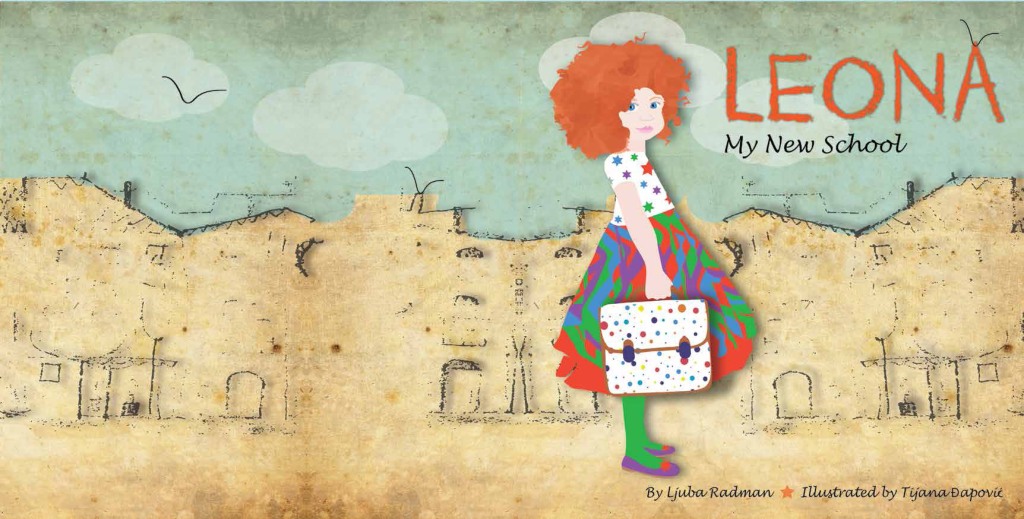
Being excluded by my class bully and her minions at school led me to identify with discriminated communities. This motivated me to found a non-profit organisation and a festival dedicated to Romani cultures and history, informing a broader audience of the exclusion and racism faced by Roma worldwide. Being shut out as a foreigner drove me to chair the International Students Committee at University in the UK, to help create a supportive community. Being bullied also forced me to question how I raise my daughter, which inspired me to write a children’s book about bullying in primary school.

Cover of the children's book "Leona, My new school" by Ljuba Radman and Tijana Djapovic. 
(All rights reserved)
Cover of the children’s book I wrote about Leona, who gets bullied at school.
Text and story: Ljuba Radman, illustrations: Tijana Djapovic (c)

Though my childhood scars did not prevent me from being bullied later on in life, they have helped me develop empathy with others and become an advocate for inclusion and equity. Likewise, this experience has taught me to truly value human kindness for the great treasure that it is.

Oversimplifying the vast issue of victimisation would be a mistake, since these human interactions are extremely complex. Regardless of our best intentions, we all carry the weight of our past, which can taint our behaviour and the way we communicate with each other. But I do think we need to strive to remain critical and introspective, while developing honest communication channels, so that we can continue to grow, both through nurture and pain.

(Title: Quote by Ovid)

“It’s the end of the world as we know it”

This R.E.M. song has been on my mind since the day Russia invaded Ukraine. The song was apparently referring to college policy debate tournaments, in which the debaters claim that any course of action will lead to nuclear war or some other catastrophe. And that seems rather fitting to our current situation. Everything in the way this military assault has been presented by the media foretells the end of an era for us all.

Art by Tijana Djapovic (c)

Vladimir Putin’s threats and the daily escalation, of attacks on the one hand, of sanctions on the other, do convey the feeling that we are witnessing an imminent Clash of the Titans. Russia vs the United States. East vs West. Autocracy vs (for the sake of comparison) Democracy.

But for anyone who is critical of American hegemony, things are not as clear-cut. I have even been hearing discussions about how this war might be the kick we all need for our society to “reboot”, so to speak. For decades, the US’s complacency has been disturbing, and there have been telling signs of the steady downfall of American dominance. Even though Europe and other parts if the world have been following in the United States’ heavy footsteps, a growing number of us are hoping for a change towards a more diverse future, both in terms of culture and economic model. After all, having a single system or person at the helm for too long is never healthy, whether it is Putin as head of state, or American-style Capitalism as an economic system. Unfortunately, the war does not leave much room for hope that it might bring about any positive change at all. Few wars ever have.

Art by Tijana Djapovic (c)

Meanwhile, we are trying to come to grips with the reality of a new war on the European continent, with the unimaginable possibility of a nuclear attack, and with yet another impending disastrous impact on our purchasing power. In the midst of it all, the deafening voices all around are paralysing. Since that fateful February 24th, I’ve been going through every media channel I could find to get a sense of what is actually going on. Finding objective and reliable sources of information among the hubbub of opinions, news updates and outrage on all sides has not been easy.

Most American media have, once again, turned a complex situation into an easily digestible battle of Good vs Evil. Even satirists, who should question the mainstream, portray Zelenskyy as a flawless hero figure standing up to Putin’s Evil Empire. Europe, too, generally seems to be falling into the trap of oversimplifying the situation. Fortunately, some well-respected media do paint a more nuanced picture, which in no way make the apology of the invasion of a sovereign state by its far more powerful neighbour. Rather, they expose the broader geo-political context and the role of Western powers in Putin’s current position of might.

It has been hard to remain objective in the midst of polarising discourses, whether anti-Russian or anti-US-NATO-EU – all three of which are conveniently thrown together by conspiracy theorists and anyone using this momentum to voice their own frustrations. In a recent opinion piece entitled Pick a side – How to take a stand in polarised times, Mehran Khalili of DiEM25, managed to highlight the difficulty in maintaining some form of objectivity without being incompassionate or unjust in this terrible situation.

Mehran Khalili’s opinion piece

Meanwhile, I am moved by the show of genuine support by ordinary people on social media, with people sharing crucial information and offering to help Ukrainian refugees arriving in neighbouring countries. By contrast, I am all the more baffled by how quickly other individuals and news organisations have absorbed everything about this conflict, and used it to make their point about any topic, completely losing sight of the actuality of war. And though I embrace the idea that, in a true democracy, everyone should have the right to be heard, I’m no longer certain how this can possibly work in reality. Social media are the closest thing to hearing everyone’s voices, and what they reveal is an unmanageable and frightening cacophony.

A few years ago, I interviewed a brilliant French scientist, François Taddei, who explained that one of the major challenges in the practice of science today is data overload. There is so much data being produced on any given subject, however inconsequential, that the absence of a broader vision and contextual interpretation of the data renders it useless. It is data for the sake of data. To illustrate his point, he mentioned the Indian parable of the blind men and the elephant, which tells us that humans tend to only see their own truth, based on their limited views and experience, thereby losing sight of the bigger picture (hear Taddei recounting the parable in French here). The same can be said about our constant flow of information, whether by news sources or by every individual voicing their own truth via social media. The infoxication we are experiencing leaves next to no headspace to focus on what is essential. And as with any intoxication, the information overload increasingly impacts our emotional health and our sense of perspective.

Illustration of the parable of the blind men and the elephant.
(Source unknown)

In this war, for instance, flagging the racism experienced by foreigners and Roma fleeing Ukraine is important. However, jumping to the conclusion that the Western World only cares about this conflict because it is targeting a largely white population is erroneous and misleading. The victims of the wars in the Balkans, in Chechnya and in Georgia were also white, but no one in the West cared much about them for years. The issue here is not race, but power. Whether economic or geo-political. Leaders of the Western world did not feel threatened in any of the above-mentioned previous bloodsheds, whereas in this instance, they do. I believe that interpreting the attention this war is getting as a racial issue, is another direct consequence of our overly fast-paced output-creating society, in which we speak up faster than we can think. When emotional reactions dictate our actions, our minds take the back seat.

What we are seeing is this tendency extending to mainstream media. With the pressure to provide round-the-clock news updates, they become increasingly distasteful and voyeuristic. It is as though the interviewers are aiming to get an emotional reaction from the people under attack, simply to feed our curiosity. Seeing how we are being spoon-fed raw emotions, I think of Alain Souchon’s song “Foule sentimentale”, in which he criticised our consumer society, singing: Sentimental crowd that we are, we yearn for ideals. We seek the stars, we wish to set sail, in search of things that can’t be bought.

French singer-songwriter Alain Souchon’s 1993 song “Foule sentimentale”

The way we now glorify Zelenskyy and the Ukrainian people for their bravery, is at the edge between genuine admiration and a consumerist craving for something authentic. And the media are using this sentiment and feeding into it. Here again, the content loses value and war is turned into a show.

CNN already perfected this technique decades ago when, just minutes after the Twin Towers were hit on September 11, 2001, they were showing the edited images in slow motion to the sound of Samuel Barber’s Adagio for Strings (which had been popularised by the war film “Platoon”). At the time, my brother and I watched in shock, from Paris, as they were playing and replaying the images of the planes crashing into the towers we had visited just a few years before. But we quickly became wary of this manipulation, which was turning an actual tragedy into a movie on the spot. And today, European media have also taken to transforming real events into tear-jerkers or sensationalism.

Samuel Barber’s Adagio for Strings, Op. 11,
performed by the Vienna Philharmonic, conducted by Gustavo Dudamel

Meanwhile, we, the audience and consumers, are caught between crying over Ukrainian casualties and looking for modern-day heroes. Despite the fact that, against all expectations, Europe is more united than it has been in decades, we are dissatisfied with our leaders’ reactions to this invasion. We want the WWII sentiment we’ve seen in films, of being united and brave against an objective evil. But as European and American heads of state know, our populations want that feeling without having to sacrifice their own safety, health or comfort. We want to go to war with Russia without suffering the consequences. Donald Trump, Tucker Carlson and their acolytes are, as always, quick to qualify any nuanced approach as a “wussification [sic] of our nation”, while none of them would give up an inch of their own privileges for anything.

British WW II poster by William Little
(Enoch Pratt Free Library / State Library Resource Center)

How, in this atmosphere, can we hope to achieve anything constructive? I am growing increasingly disappointed with what we, as a species, do with our freedom of speech – where it still exists. On one end of the spectrum, emotion has substituted rationality, while on the other, rational speech has been deprived of emotion. But both our minds and our hearts are necessary compasses to make right decisions. I believe that, given a little bit more headspace to breathe and think, by teaching ourselves to listen a little more and talk a little less, we could filter (rather than censor) what we express and find more middle ground.

Until this materialises, I am reverting to carefully chosen sources of information, reducing the time spent consuming news, and trying to let the information sink in before expressing an opinion.

I wish to end this text by expressing my deep sadness at the catastrophe that is this war. Or any war. The suffering it is causing will linger on for decades to come. My heart aches for all the victims and their families.

(Title: Song by John Michael Stipe, R.E.M.)

“No flag, no country! You can’t have one”

I first heard this line over two decades ago, when a friend introduced me to Eddie Izzard‘s comedic genius with a VHS of his show “Dress to Kill“. In it, Izzard is funnier than ever, as he puts his own spin on human history. He introduces the topic of colonialism with this memorable sentence:

“We stole countries with the cunning use of flags.”

– Eddie Izzard in “Dress to Kill”

You should definitely watch the rest of this sketch here, as only Eddie can tell it as it should be told.

Excerpt about flags, taken from Eddie Izzard’s 1999 stand-up comedy show “Dress to Kill”

I started writing this text last week, and now that war has broken out on the European continent, it seems sadly apropos. Personally, I have never quite understood how flags can trigger such strong emotions. In the case of the United States of America, most Europeans would argue that school kids pledging allegiance to the flag every morning is overdoing it a bit. But flags everywhere do awaken feelings that, outside of a war context, my mind cannot comprehend. This is not to say that these sentiments are necessarily negative. We all know flags can embody collective pride and freedom from oppression. But they have too often been waved to celebrate the freedom to oppress. Or the freedom to claim land for a people, even on the moon.

Flags (Source: Canva)

Flags representing groups other than nation states, for instance those whose rights have been violated, do not seem to have the same effect. For example, although the Romani people‘s or the LGBTQ+ Community‘s flags may rouse ardour among the people they represent, they are mostly used by these groups to highlight the recognition of their struggles and the celebration of their existence. But in the case of nation states, flags are inextricably tied to land ownership and a shared past. And when they are waved, it is mostly to ignite pride for victories over another nation, hence at another people’s expense. The Collins Dictionary’s definition of flag-waving confirms this sentiment:

Flag-waving in American English

1.  an effort to arouse intense patriotic or nationalist feelings by a deliberate appeal to the emotions

2.  a conspicuous show of patriotism

Collins Dictionary

That is precisely why I am uncomfortable with flags. This feeling may also be the result of my own background, with a German and Croatian heritage. Growing up abroad, I carried the inherited weight of the German flag which, although it is no longer the National Socialist flag, still bears the stigma of the unfathomable atrocities committed by Germans during Nazism. On the Croatian side, too, flags leave a bitter taste in my mouth. I have vivid memories of the context in which Serbian and Croatian flags were tied to tanks in the nineties, mere years after so many of the same people had cheered for the Yugoslav flag. (Oh, how quickly the masses trade one set of convictions for another!)

Whatever the reason for my discomfort, raised flags do generally serve to rekindle nationalisms and accentuate what divides us. And as another stand-up comedian, Doug Stanhope, pointed out:

Nationalism does nothing but teach you how to hate people that you’ve never met and take pride in accomplishments you had no part in.”

– Doug Stanhope

Doug Stanhope on nationalism and “saving the French”

Of course, not all who are attached to their flag are nationalists. Many see in it their bond with a community, which fulfils a fundamental need to belong. Sharing a common experience with a group of people can be very comforting, especially in times of relative isolation. But whilst patriotism places an emphasis on shared values and beliefs, nationalism rests on a shared cultural past, language, and heritage. This means that, by definition, nationalism excludes all who don’t share the same origins.

Its emphasis on heritage also goes hand in hand with any given group’s claim on the past achievements of their compatriots, whether living or long gone. And today’s successes of a handful of winners at competitions is celebrated by the entire community as their own.

What being a foreigner has also taught me over the years, is that people’s relationship with their country is like an extension of that to their family. Although most individuals will readily criticise their own state or countrymen/-women, any negative comment about their country by a foreigner, or alien, will be taken as a personal attack. One of the funnier examples of this was an experience I had while living in Birmingham. I once casually mentioned to my English flatmates that I didn’t like beans on toast, which set off a cacophony of xenophobic and nationalist statements. “Did I think my European grilled goat cheese in bacon sandwich was better than their English beans on toast?!” All of a sudden, our conversation wasn’t about food anymore, but about which nation was better than the other.

This universal discourse of what’s “ours” or “theirs” – with the implicit assumption that “ours” trumps “theirs” – was addressed in a documentary film entitled “Whose is this Song?” In it, director Adela Peeva goes on a search for the origins of a traditional tune sung in every Balkan country. Throughout her journey she found that, rather than bringing people together, the song was used as an excuse to divide communities.

Trailer of Adela Peeva’s documentary “Whose is this Song?”

Whereas I can’t understand strong emotional reactions to flags, I do have deep feelings and memories tied with music, food and dance. But even these three unifying elements, creating ties across all other cultural barriers, are being used by calculating leaders to add fuel to the flames of simmering nationalisms. My friends and I may not care whether the coffee we drink is Turkish or Greek, or whether we use Québécois expressions versus French ones, but there will always be someone there to point out dissimilarities and ask us to choose sides.

So where does that leave us lot, who just want to enjoy good company, food, music, and conversations, thus celebrating our ever-evolving group identities? While we try to build bridges between communities, great forces are working hard to shift popular focus back to flags and nationalisms. Away from the individual and his achievements, towards the group and its dangerous stupidity.

In the midst of disconcerting populist discourses on all continents, I think back on how puzzled we were by George W. Bush’s preemptive war in Iraq, back in the day. What a strange concept it seemed at the time, to attack another country because you suspect it might attack you. Offense being the best defence is a ridiculously dangerous notion. But if Bush Junior did it in 2003, using post-9/11 anti-Arab sentiment as ammunition, the same discourse will doubtless work elsewhere, in the aftermath of COVID and the 2008 financial crisis. For what better way is there to divert attention from the true causes of the wealth and power gap in our societies than flags?

Taken from art by Tijana Djapovic (c)

In order to be prepared for all possible outcomes of today’s multiple crises, all we can do is remain adaptable, keep our eyes and ears open, move the needle where we can, and be ready to react fast. I also intend to use my universal foreignness as an opportunity to acquire as many citizenships as possible, so that flags and borders can’t lock me in.

Meanwhile, whenever I want to take a step back and laugh at our human folly, I watch Eddie Izzard’s show again, as a faithful member of his flagless community of enthusiasts, who know the meaning of:

“Cake or Death?”

– Eddie Izzard in “Dress to Kill”

Here is your pathway to join the community: Dress to Kill – watch the show.  

(Title: Quote from Eddie Izzard’s “Dress to Kill”)